Cross-device remote proctoring serving 2M+ monthly users across 180+ countries.
I turn complex AI and enterprise workflows into clear products people trust — and teams can ship.
Lead product designer with 15+ years of experience. During my time at Pearson VUE, I took human-AI workflows, enterprise platforms, and high-scale customer journeys from ambiguity to launch. I combine systems thinking, research, rapid prototyping, and hands-on craft to align Product and Engineering — delivering 10× faster reviews, 65% less friction, and 300% growth.
Pilot validated at 98% reviewer–investigator agreement, 4.5 / 5 user satisfaction.
Multi-tenant SaaS, operational tooling, role-tiered enterprise platforms.
See the products move.
Open a short prototype walkthrough to see how the interaction model works—not only the final screen.
Six case studies. One design framework: where humans and machines decide together.
Every case study below sits inside the same trust-critical workflow: a capable model, a consequential decision, and a human who has to own the outcome. The diagram below shows where each one lives.
From model signal to accountable decision, across six shipped systems
Each case study covers a different slice of the same workflow. AI-Assisted Review Workstation spans model output through human decision and audit — the deepest demonstration of human-AI collaboration. AI-Guided Environment Validation, Remote Proctoring Check-In Modernization, and Biometric Admissions Workflow live closer to capture and platform. Global Certification Portal and Enterprise B2B Asset Platform are the platform-scale enterprise studies.
Six systems designed and shipped during my time at Pearson VUE. Read in order, or skim by category.


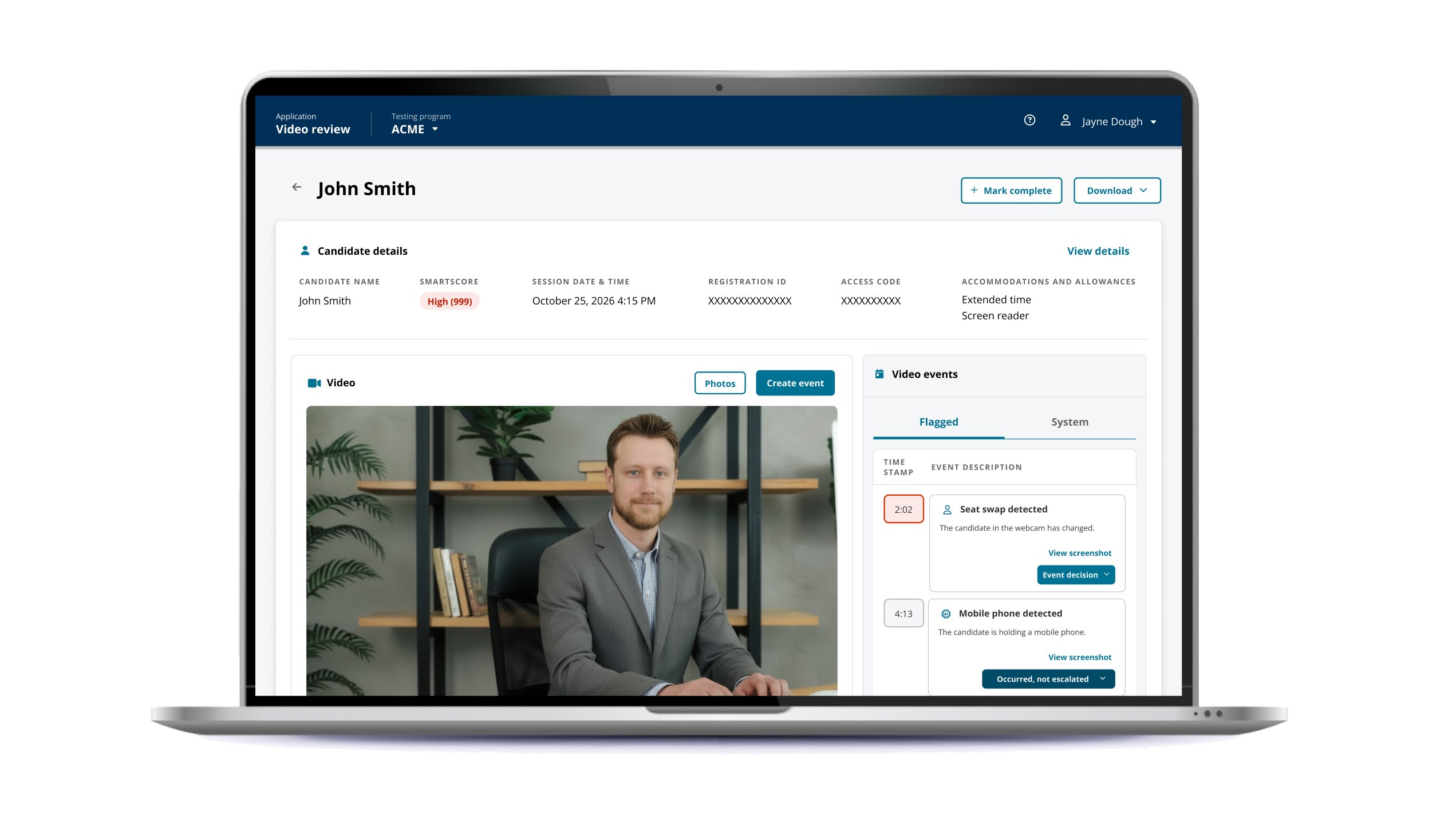
AI-Assisted Review Workstation
A human-in-the-loop review system for high-stakes content moderation. Traffic-light triage, evidence-first design, calibrated transparency — the architecture that proves the AI without forcing operators to trust it.
- 10×faster reviews
- 98%operator agreement
- 4.5 / 5operator rating (n=6)


AI-Guided Environment Validation
A pre-exam workspace scan that uses AI to detect prohibited objects and unclear environments — with explainability targets built in. Designed around the candidate's confidence, not just the model's confidence.
- 70% · 20%AI target rates
- 4.1 / 5explainability rating
- Pilotvalidation stage


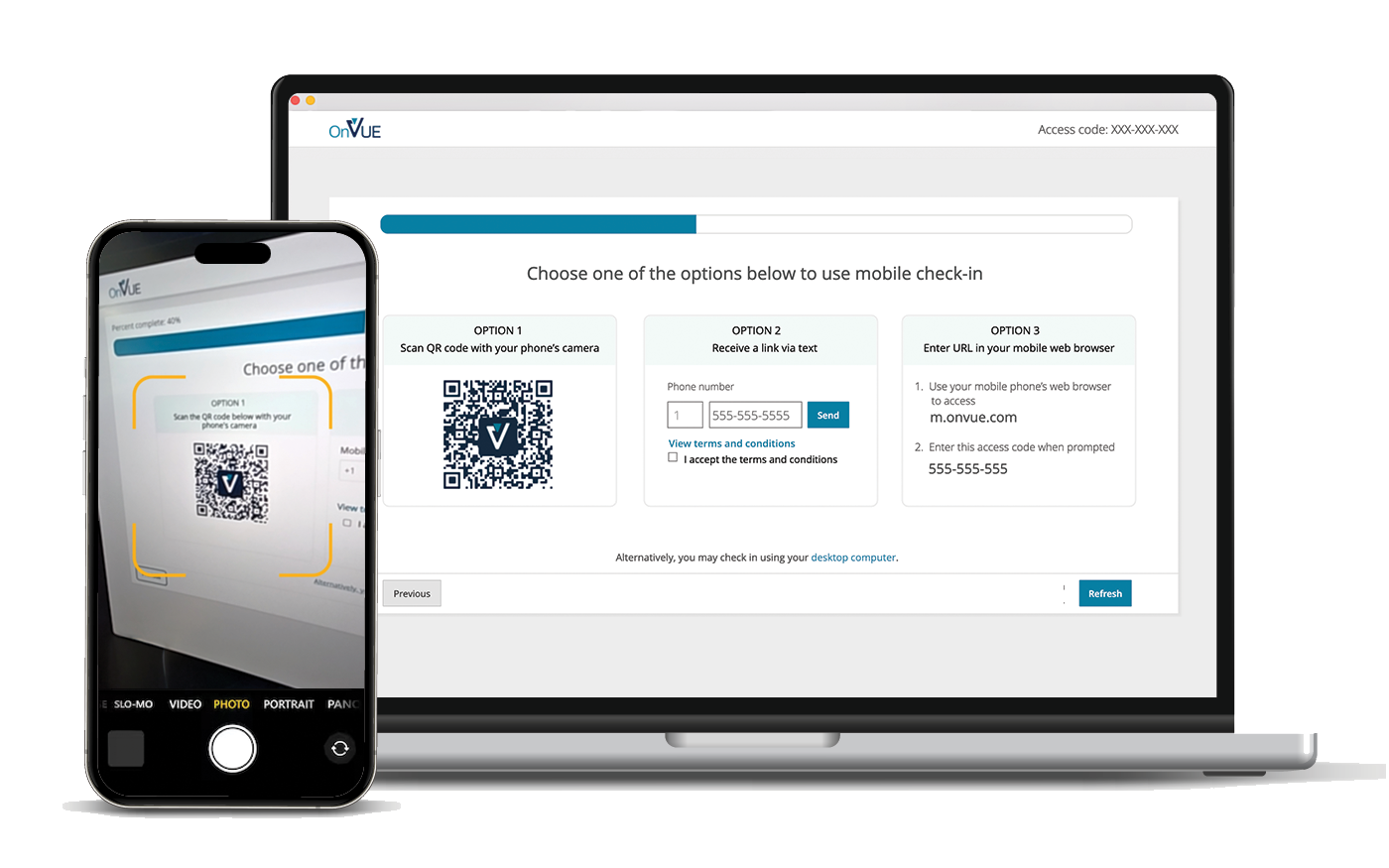
Remote Proctoring Check-In Modernization
Three-rail check-in (web · desktop · mobile bridge) for a remote proctoring platform that handles 21M+ exams annually. QR mid-session device handoff as a first-class state.
- 300%growth supported
- 25%failure reduction
- 2M+monthly users


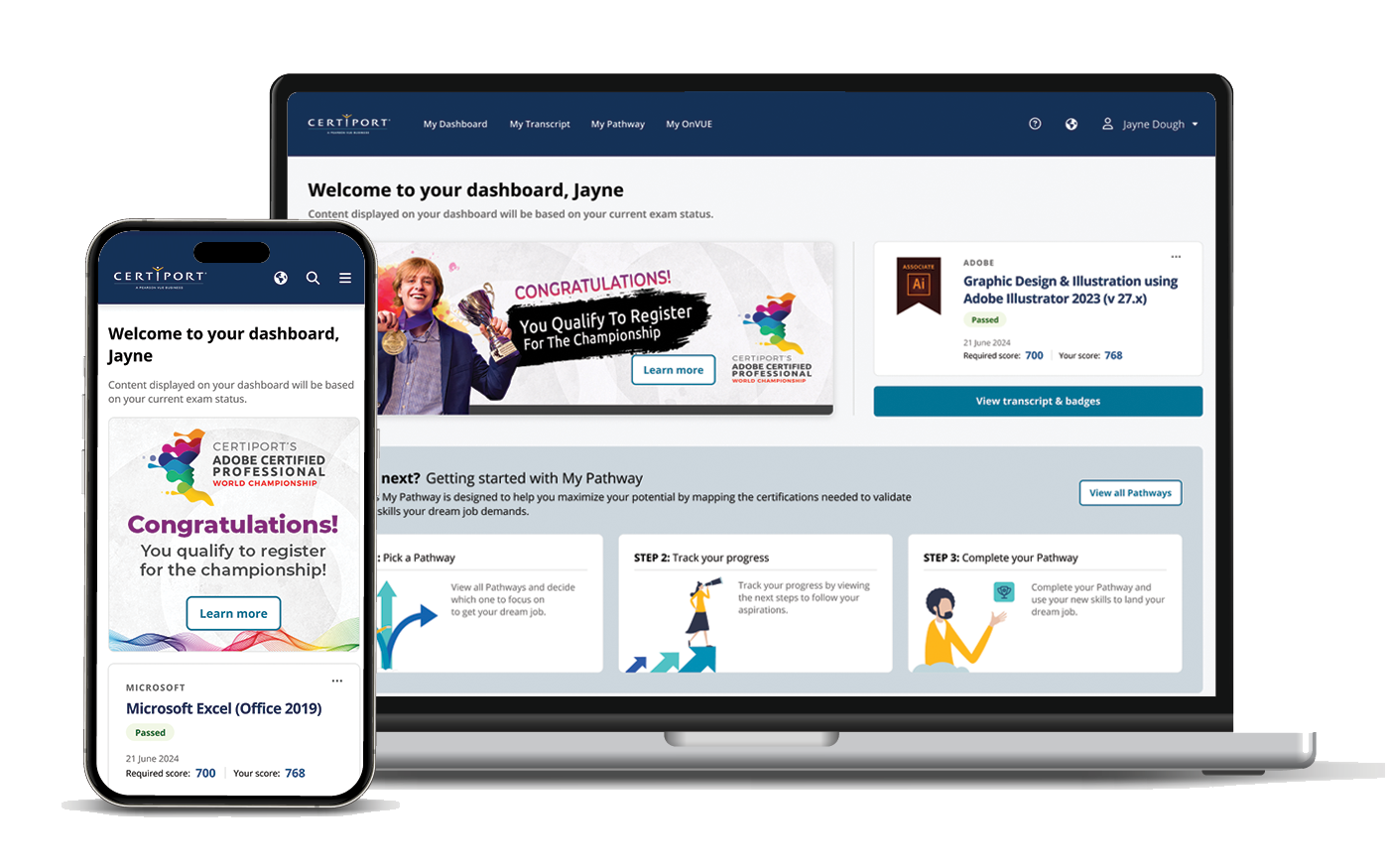
Global Certification Portal
IA, navigation, and personalization redesign for a portal serving three audiences (B2C, educators, professionals). Five-day GV-style design sprint cadence.
- 65%friction reduction
- 200K+monthly users
- 4.5 / 5satisfaction rating


Enterprise B2B Asset Platform
Role-tiered voucher and asset management for three of the world's largest exam programs (Microsoft, Amazon, Apple). 16 prioritized opportunities, one three-year roadmap.
- 50%time-on-task ↓
- 16prioritized opps
- 3-yearroadmap shipped


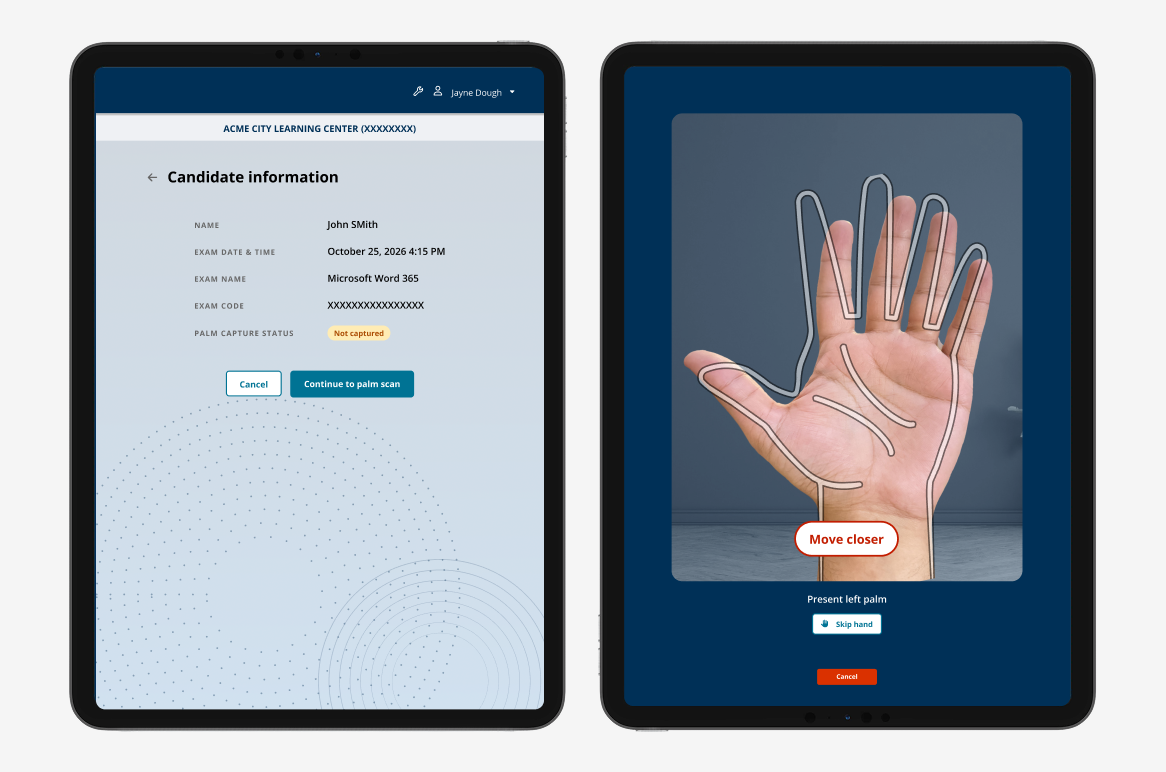
Biometric Admissions Workflow
Offline-capable, certificate-pinned tablet design for high-security admissions. Palm biometric + ID validation on LAN, Azure fallback, recovery paths for every failure mode.
- 5failure modes · paths
- 4 TAs · 2 sitespilot scope
- 0permanent-block states
Three principles that govern every case study above.
Evidence-first design
I translate ambiguity — AI uncertainty, compliance constraint, operational reality — into workflows people can audit. A model probability is not a verdict. The product needs to show what the AI saw, why it flagged it, what the alternatives are, and where the human chose otherwise.
Recovery as a first-class action
Override, escalate, revoke, retry, fall back to human — these are not edge cases. They are the design. I draw the state machine before I draw the happy path, because the happy path doesn't survive contact with real operations.
Systems, not screens
A finished design isn't a Figma file. It's the cross-system context table, the role-tiered dashboard, the offline-mode fallback, the cert-pinning rule, the audit trail schema, and the response-to-research log. I ship the spec, not the surface.
What people I shipped with say.
He's the kind of designer you want on complex platforms where the user experience directly impacts trust and operational outcomes. Exceptional at turning messy constraints into intuitive flows, aligning stakeholders quickly, and delivering high-quality iterations at speed.
Greg AndersonSenior Product ManagerStrong ability to turn detailed technical requirements into intuitive, user-friendly experiences. Excellent systems thinking — balancing user needs, workflows, and platform constraints to deliver a streamlined and scalable solution.
Mani AnnaProduct ArchitectAlways impressed by the clarity and comprehensiveness of the designs and prototypes he created. He knows how to make designs that are clean, functional, and straightforward to implement and develop.
Eric BootheSenior Software Developer · CertiportWhether building from scratch or tackling a difficult revamp, Michael consistently delivered thoughtful, scalable designs. A rare talent for articulating the 'why' behind every interaction, ensuring the final implementation matches the original vision perfectly.
Michele HuspekSenior Business Systems Analyst · Pearson