← Selected Work
Certiport Candidate Portal
Case Study

Certiport Candidate Portal

Modernizing a global certification platform serving 200K+ new monthly users.

Legacy ModernizationPortal DesignEnterprise SaaSFigma
Role
Led digital transformation of legacy portal
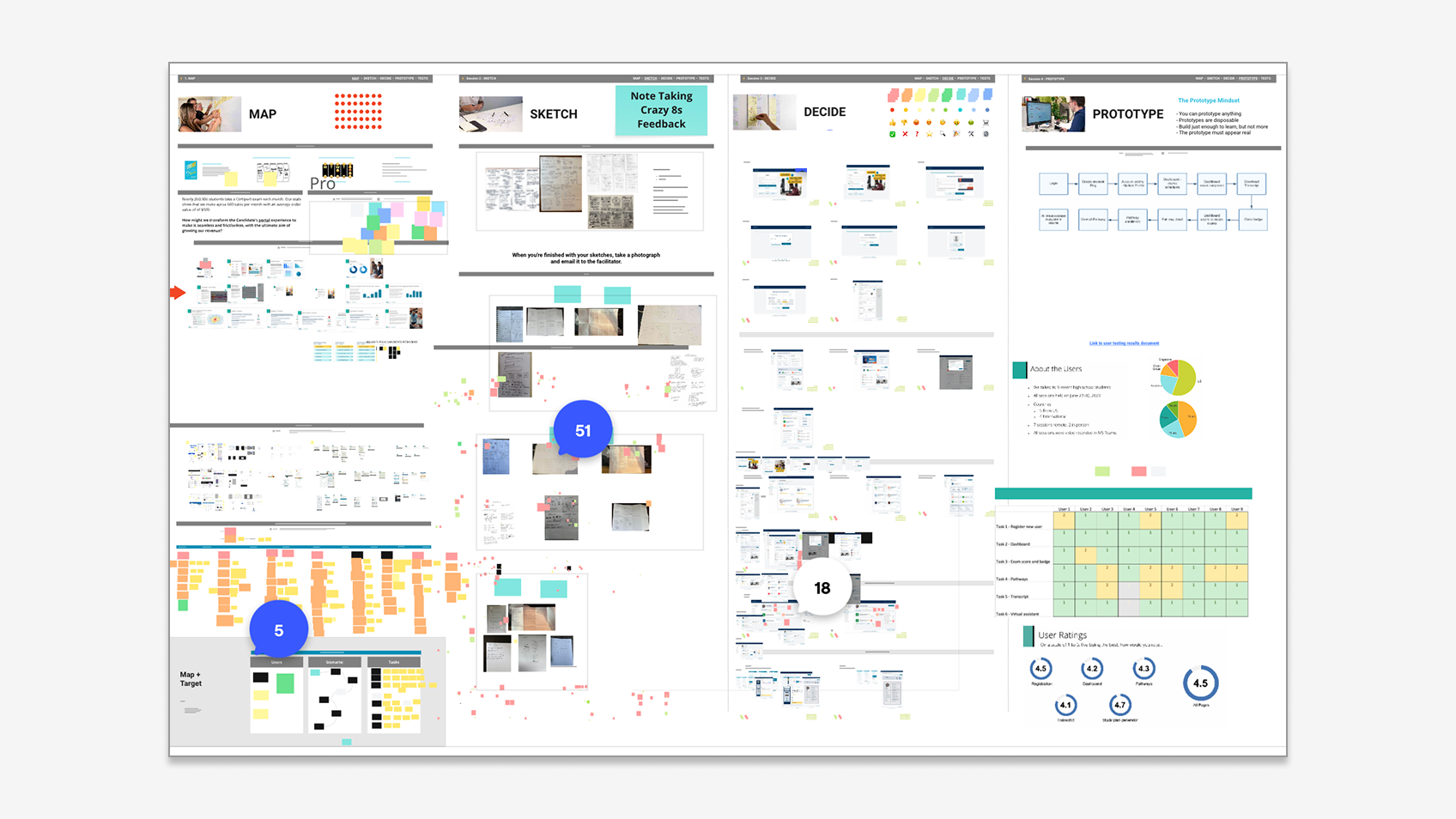
Facilitated full engagement design sprint with 10+ stakeholders
Negotiated phased development approach using usability data
Type of Work
Omnichannel strategy (classroom to digital)
Enterprise systems thinking
Mobile-first responsive design
High-Level Impact
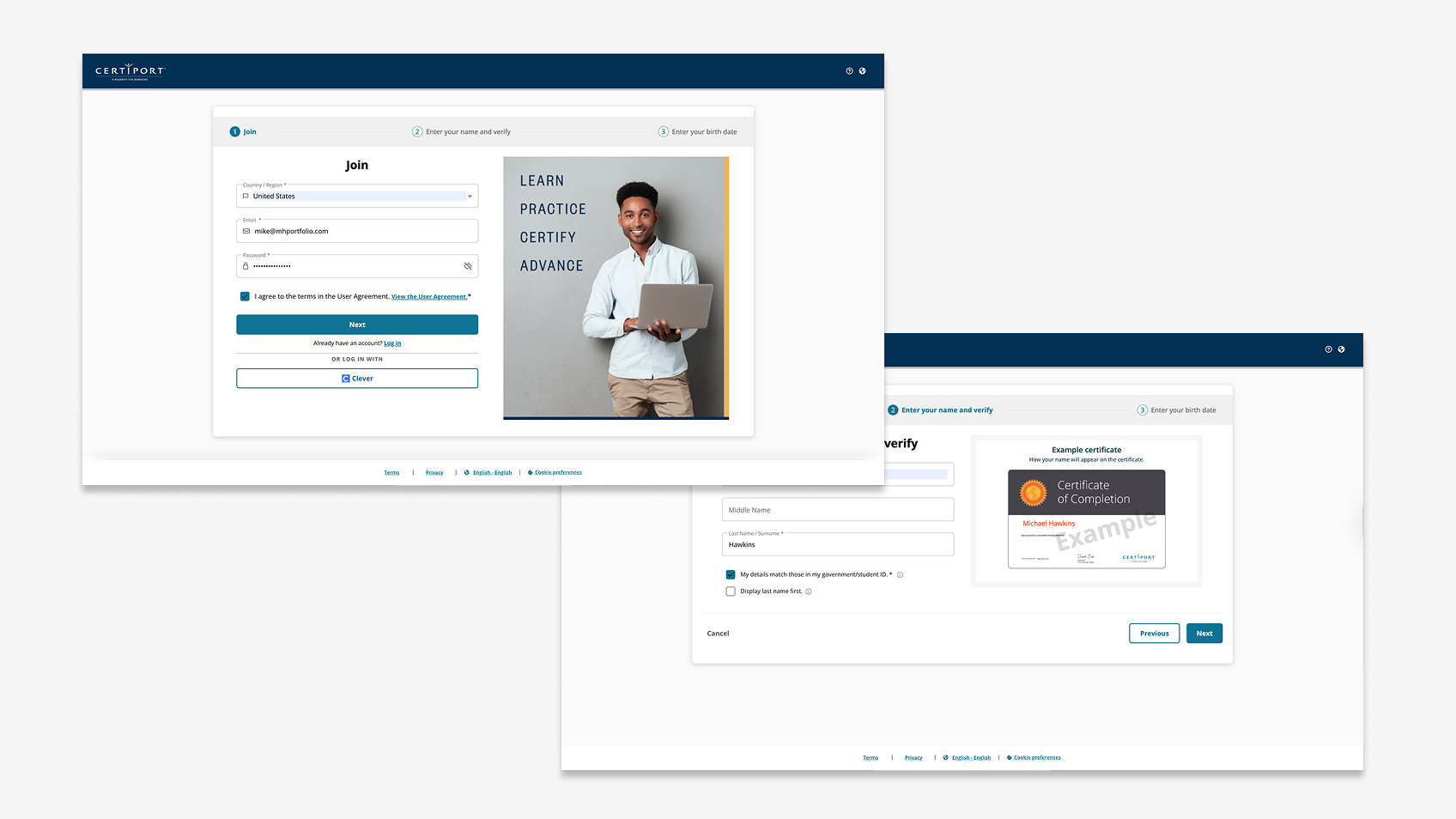
Reduced registration friction to 30-second flow
Established framework to drive certifications per candidate from 1.84 to 3.00
Achieved WCAG 2.1 AA compliance and 40% faster design-to-dev handoff

Overview

Redesigning a legacy certification portal for clarity and momentum.

Business context: The Candidate Portal serves a large, high‑volume audience (including K‑12) where progress clarity and next steps directly affect completion, support load, and satisfaction.

What I led: I led the modernization of a text‑heavy, non‑responsive portal into a clearer, role‑aware experience-anchored by a design sprint that aligned teams on “What’s Next?”

Redesigning a legacy certification portal for clarity and momentum.

Challenge

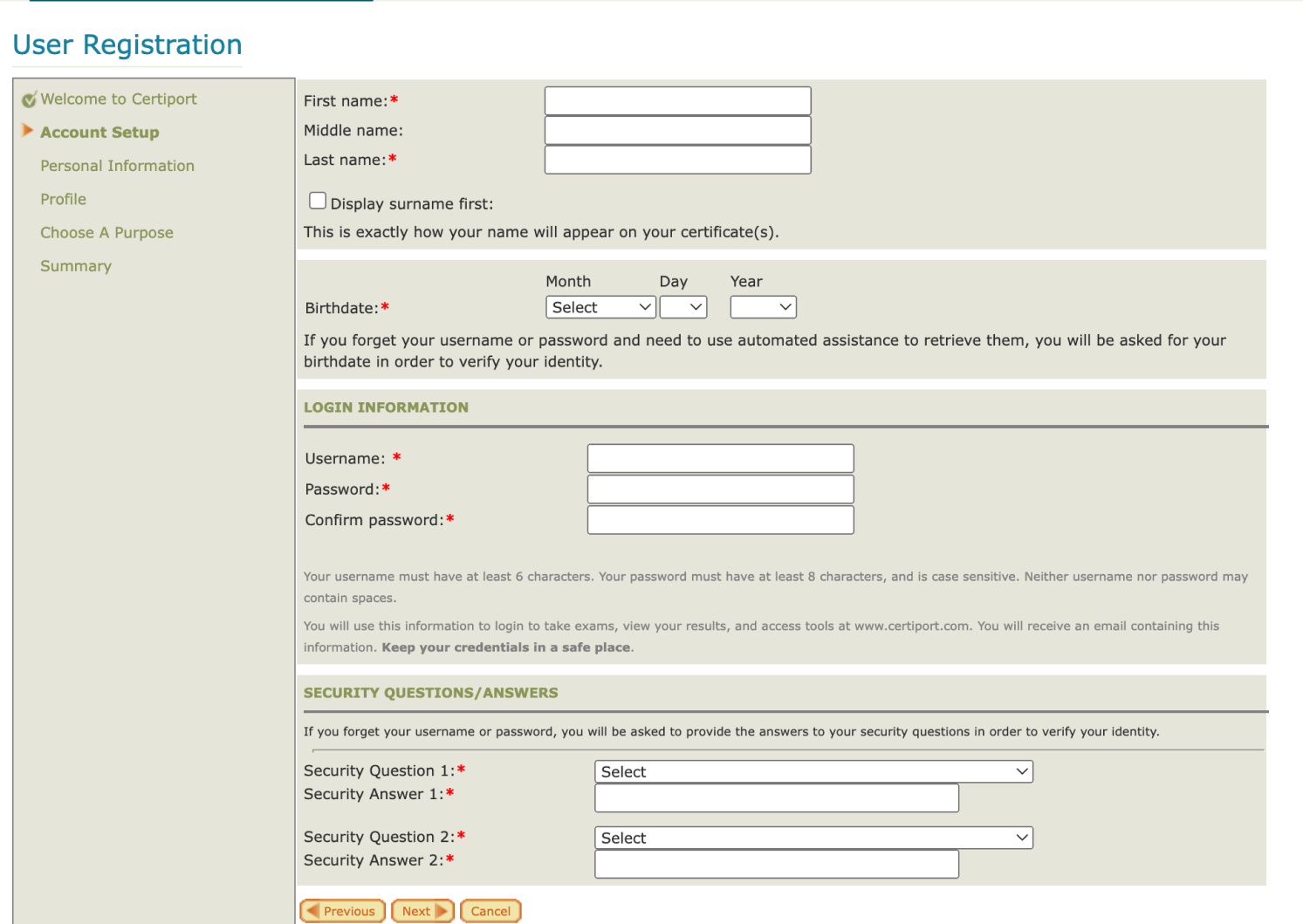
Overwhelming IA and non‑responsive layouts buried the user’s next action.

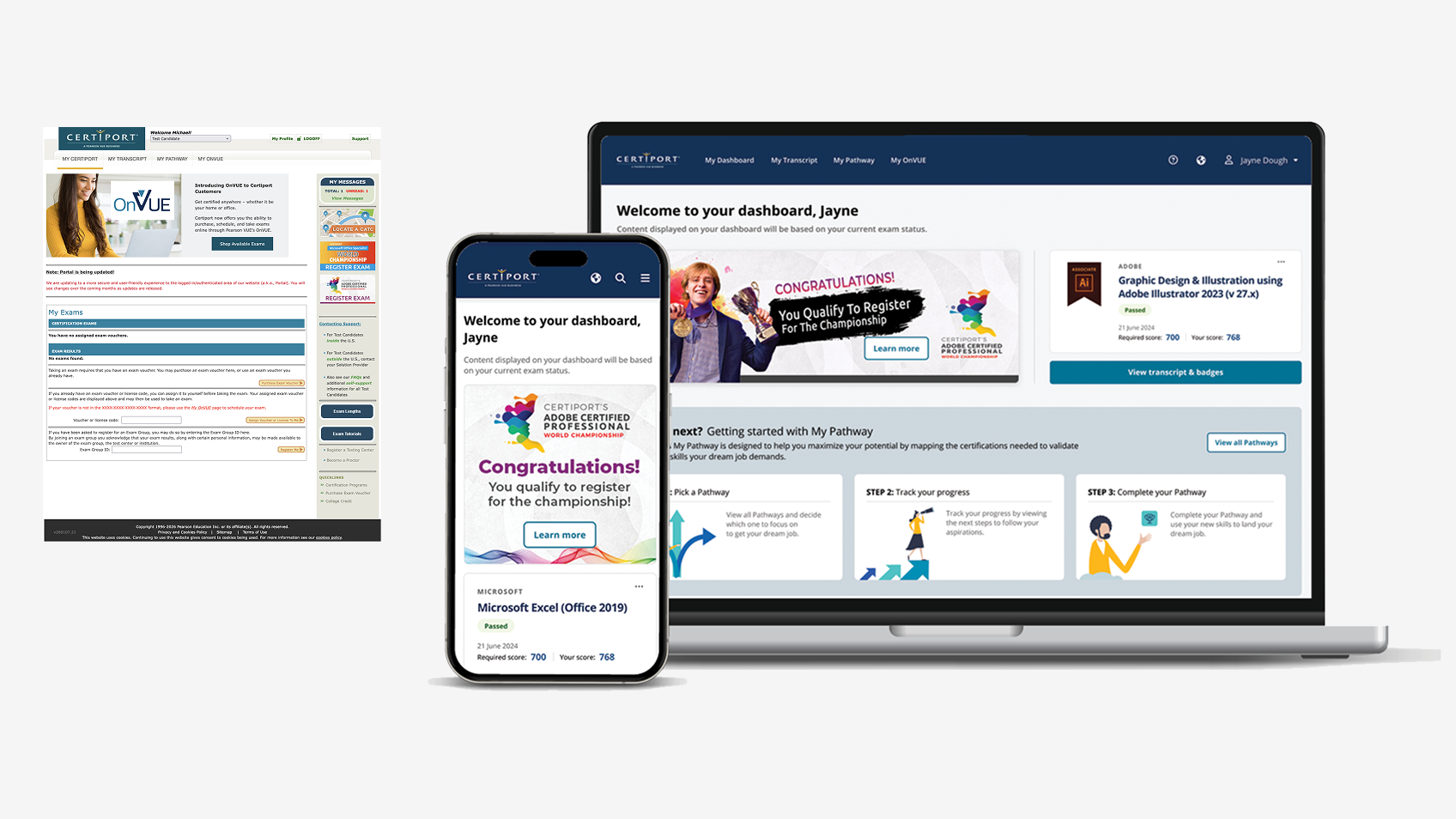
The legacy portal made it hard to understand status, find certificates, and take the right next step-especially on mobile. The information architecture was administrative rather than user‑centered.

Role & Team

Owned sprint‑led IA direction and the system-level UI foundation.

  • I facilitated a cross‑functional design sprint to realign the IA around user goals.
  • I owned key UX flows and the modular UI patterns used for scalable delivery.
  • I partnered with product and engineering to support phased rollout without breaking existing paths.
  • Portal design sprint artifacts.

Constraints

High volume, phased delivery, and a broad user spectrum.

  • Must support K‑12 and adult learners with different expectations and constraints.
  • Needed modular patterns to scale across pages and features.
  • Had to modernize without interrupting active certification workflows.

Approach / Process

Sprint to clarify “What’s Next?”, then systematize for scale.

I used sprint outputs to define a clearer navigation model, then translated it into reusable components (cards, progress indicators, and role-aware patterns) to accelerate design-to-dev handoff and reduce future fragmentation.

Sprint to clarify “What’s Next?”, then systematize for scale.

Key Design Decisions

Progress hub, frictionless actions, and role-aware clarity.

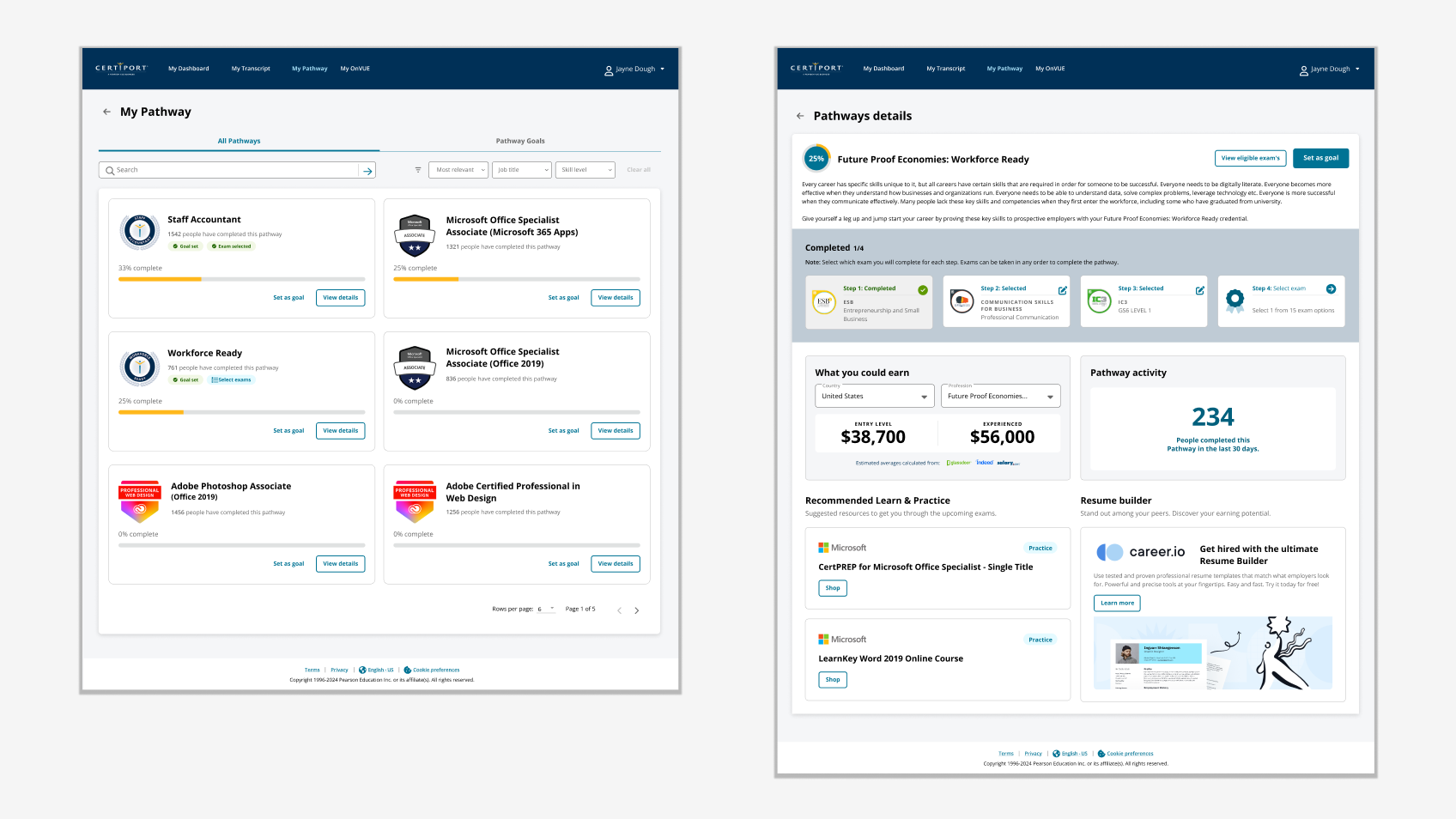
  • Progress hub: made status and next steps glanceable.
  • Frictionless actions: reduced effort to access what matters (certificates, schedules, requirements).
  • Role-aware experience: shaped content and navigation around the user’s context.
Progress hub, frictionless actions, and role-aware clarity.

Outcome / Impact

Improved clarity for a high‑volume portal audience.

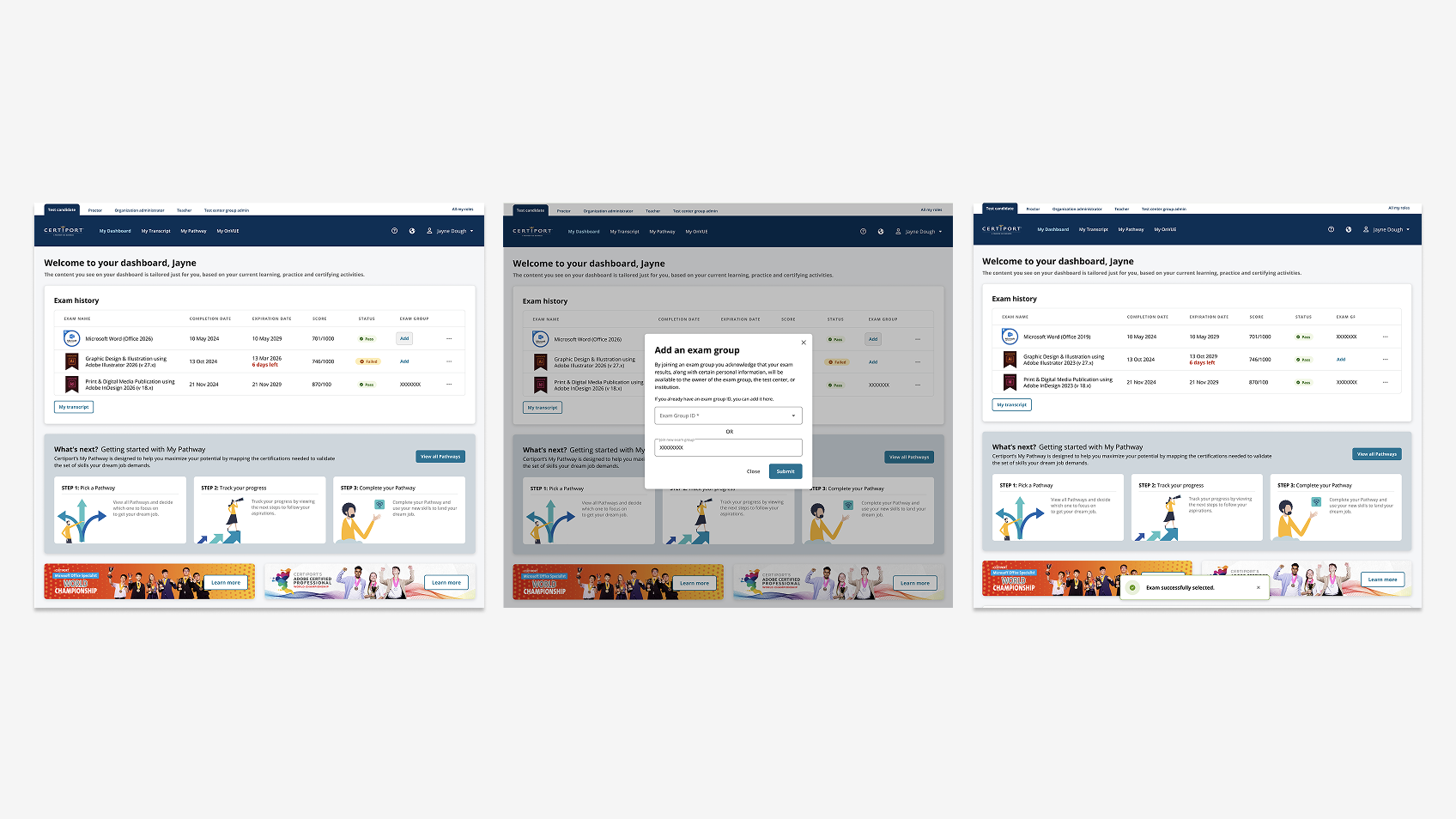
The modernization improved usability and reduced friction for new monthly users while establishing scalable UI patterns for ongoing improvements.

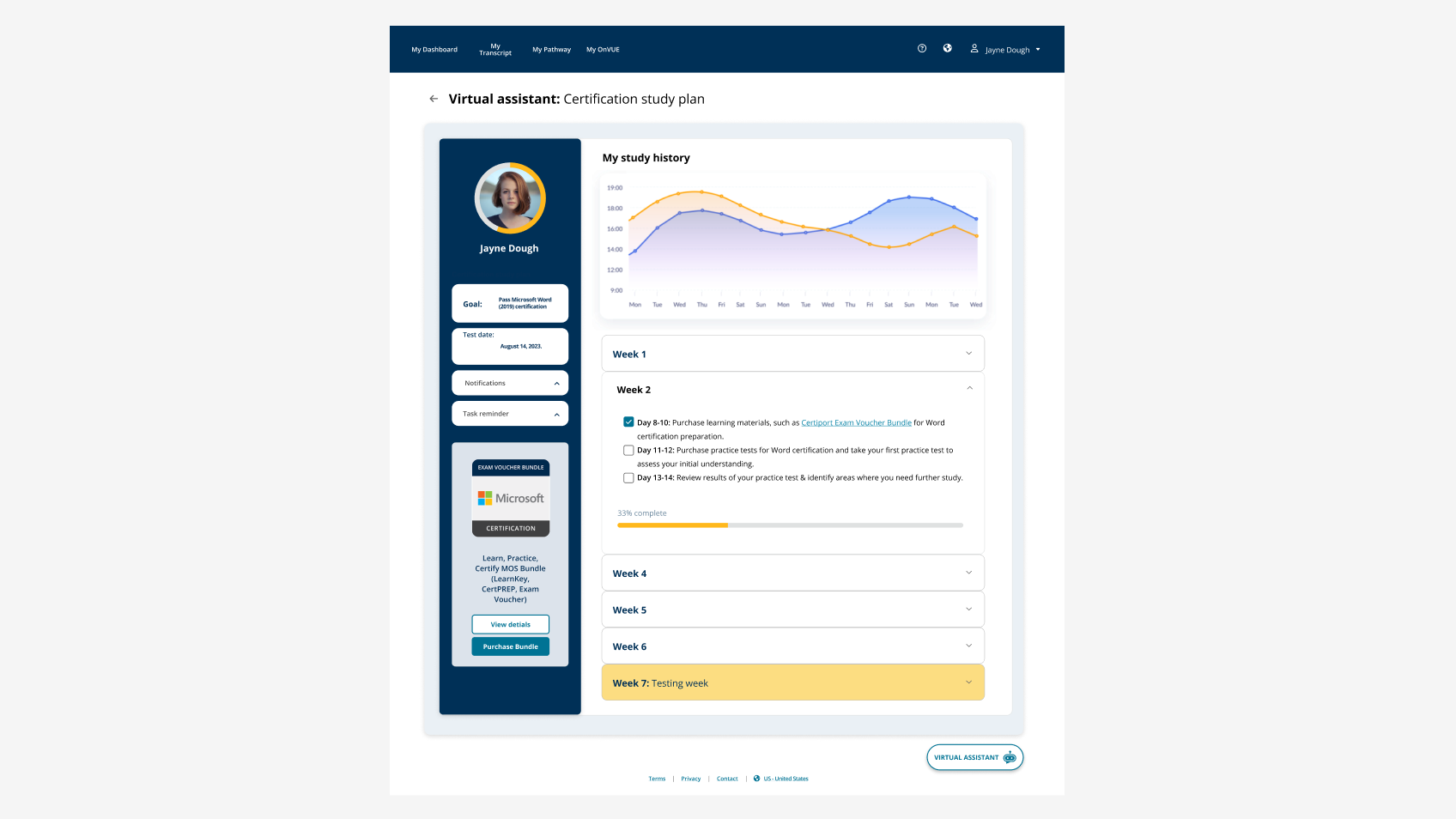
Certiport portal modernization screens.

See the Outcomes panel for the tracked metrics (e.g., user volume and friction reduction).

Reflection

Modernization is alignment: the UI ships when teams share a clear model.

Design sprints created the alignment needed to modernize without churn-then modular patterns kept delivery consistent as the product evolved.

Outcomes
200K+
New monthly users - Candidate Portal
65%
Friction reduction - Candidate Portal