// ABOUT · Lead Product Designer · MSP · 2026

I design for the moment when a person has to trust a machine and still own the decision.

I am a hands-on, ambiguity-loving, AI-forward Product Designer with 15+ years leading end-to-end UX for B2B and B2C SaaS, human-AI decision systems, and trust-critical products at global scale. I am based in Minneapolis-St. Paul and am open to remote work or relocation.

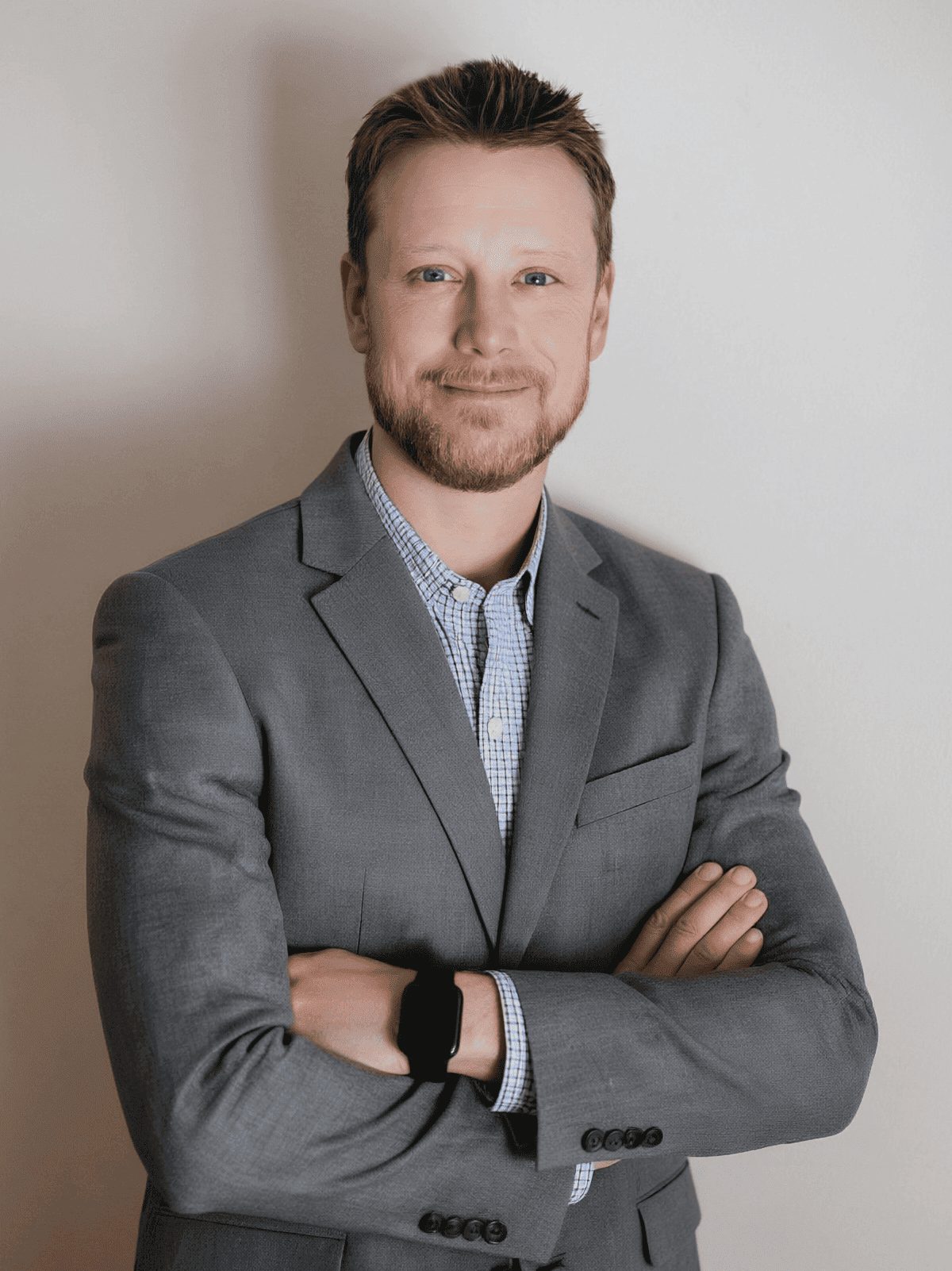
Portrait of Michael Hawkins
// PORTRAIT MH · 2026

I am Michael Hawkins, a Lead Product Designer. During my time at Pearson VUE, I worked in an industry where trust is the product. High-stakes credentialing, remote proctoring, biometric admissions, and enterprise SaaS all share the same pressure. When a screen is confusing, a default is wrong, or a system output is unclear, the problem is not just usability. It is integrity.

The thread across my work is the moment when a person has to act on what a system is telling them. They may need to accept a candidate, escalate a review, trust a score, or override a recommendation. The important question is not only whether the machine is right. It is whether the interface helps the person make a good decision.

I design for that.

// THE ARC

How I got here.

My path started in children’s education software and led into testing, credentialing, enterprise SaaS, and human-AI decision systems. The thread stayed consistent throughout the work.

I came up in product design when "UX" and "graphic design" were still fighting for the same chair. My early work was at a children’s education software company, where the constraint was simple and unforgiving. An eight-year-old has no patience for friction and no vocabulary for complaints. That taught me to design as though the user has no manual, because they usually do not. It is also where I learned to lead through standards, critique, and mentorship. Giving other designers honest feedback and room to grow has been part of my practice ever since.

During my time at Pearson VUE, I worked across proctoring, admissions, and credentialing. I designed surfaces where a confusing interaction could strand a candidate, delay a credential, or create a contested exam. The pressure was clarifying. You cannot talk your way out of poor design when someone's livelihood depends on the next click.

Recent work moved that practice toward human-AI decision systems. AI-Assisted Review Workstation became the clearest example: the system narrows attention, while the interface shows evidence, preserves the audit trail, and keeps interpretation, override, and escalation with accountable people.

// WHY HUMAN-AI WORK

Trust is not a feature. It is the deliverable.

AI is being asked to participate in increasingly consequential decisions. The interfaces around it determine whether that participation feels legitimate.

The hardest design problem in human and AI work is not accuracy alone. It is calibration between the model's confidence and the operator's confidence. When that calibration is wrong, the operator either over-trusts the AI or ignores it entirely. Both outcomes waste the investment.

Most of my recent work has focused on designing that calibration. I care about what the model surfaces, how it shows its work, what evidence it presents, where the override lives, and how the audit trail reads back later. This is less about "explainability" as a presentation term and more about helping an operator act and defend the action.

I expect this discipline to become standard in products where AI influences consequential decisions. I am building toward that kind of work.

// HOW I WORK

Three working principles.

These principles show up across the case studies. They are also how I work with product managers, engineers, researchers, and stakeholders.

// PRINCIPLE 01

Evidence-First Design

Decisions should be backed by evidence the user can see. That evidence can be the data behind a model signal, the audit trail behind an override, or the comparison that justified a design change. The surface should make its reasoning visible.

  • research synthesis
  • usability testing
  • traffic-light triage
  • audit trail UX
// PRINCIPLE 02

Cross-Functional Trust

Design ships when product, engineering, research, and the affected operators share the same understanding of what is being built. I treat alignment as a design artifact, not as a meeting outcome.

  • cross-functional workshops
  • design mentorship & critique
  • product-direction framing
  • stakeholder interviews
// PRINCIPLE 03

Systems at Scale

Every screen is part of a larger system: upstream policy, downstream audit, parallel surfaces, recovery paths. I design for the system, not just the screen.

  • information architecture
  • design standards & tokens
  • multi-surface flows
  • offline-first patterns
// PRINCIPLE 04

Recovery as First-Class Action

Override, escalation, retry, and sync-later actions deserve the same care as the happy path. Users often remember the product most clearly when something breaks.

  • failure-mode mapping
  • state machines
  • graceful degradation
  • resilience patterns
// VOUCHED FOR

What colleagues have said.

These recommendations come from product, engineering, and analyst partners across multiple programs. Names are retained, and affiliations remain limited where confidentiality requires it.

"He's the kind of designer you want on complex platforms where the user experience directly impacts trust and operational outcomes. He's exceptional at turning messy constraints into intuitive flows, aligning stakeholders quickly, and delivering high-quality iterations at speed."

Greg Anderson Senior Product Manager · Pearson

"Michael has a strong ability to turn detailed technical requirements into intuitive, user-friendly experiences. He demonstrated excellent systems thinking, balancing user needs, workflows, and platform constraints to deliver a streamlined and scalable solution."

Mani Anna Product Architect · Pearson

"Always impressed by the clarity and comprehensiveness of the designs and prototypes he created. He knows how to make designs that are clean, functional, and straightforward to implement and develop."

Eric Boothe Senior Software Developer · Certiport

"Whether building from scratch or tackling a difficult revamp, Michael consistently delivered thoughtful, scalable designs. He has a rare talent for articulating the 'why' behind every interaction, which helped the final implementation match the original vision."

Michele Huspek Senior Business Systems Analyst · Pearson
// Have a complex product problem?

Get In Touch