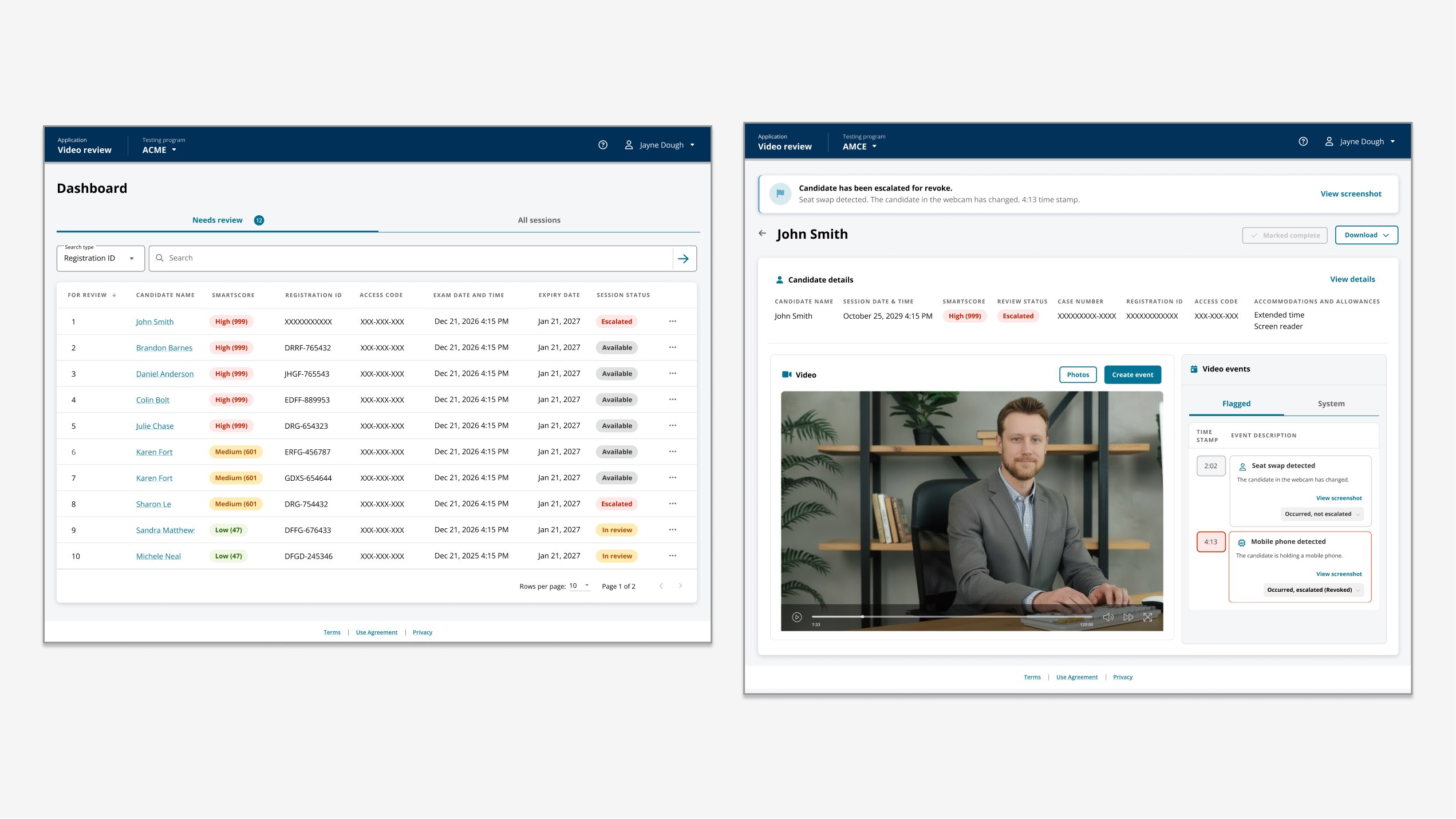
Decision 01
Use the signal as a pointer, not an answer.
A risk flag opens the exact moment and its evidence.
I designed an evidence-centered review workstation that uses model signals to narrow attention while keeping interpretation, escalation, and the final decision with accountable people.
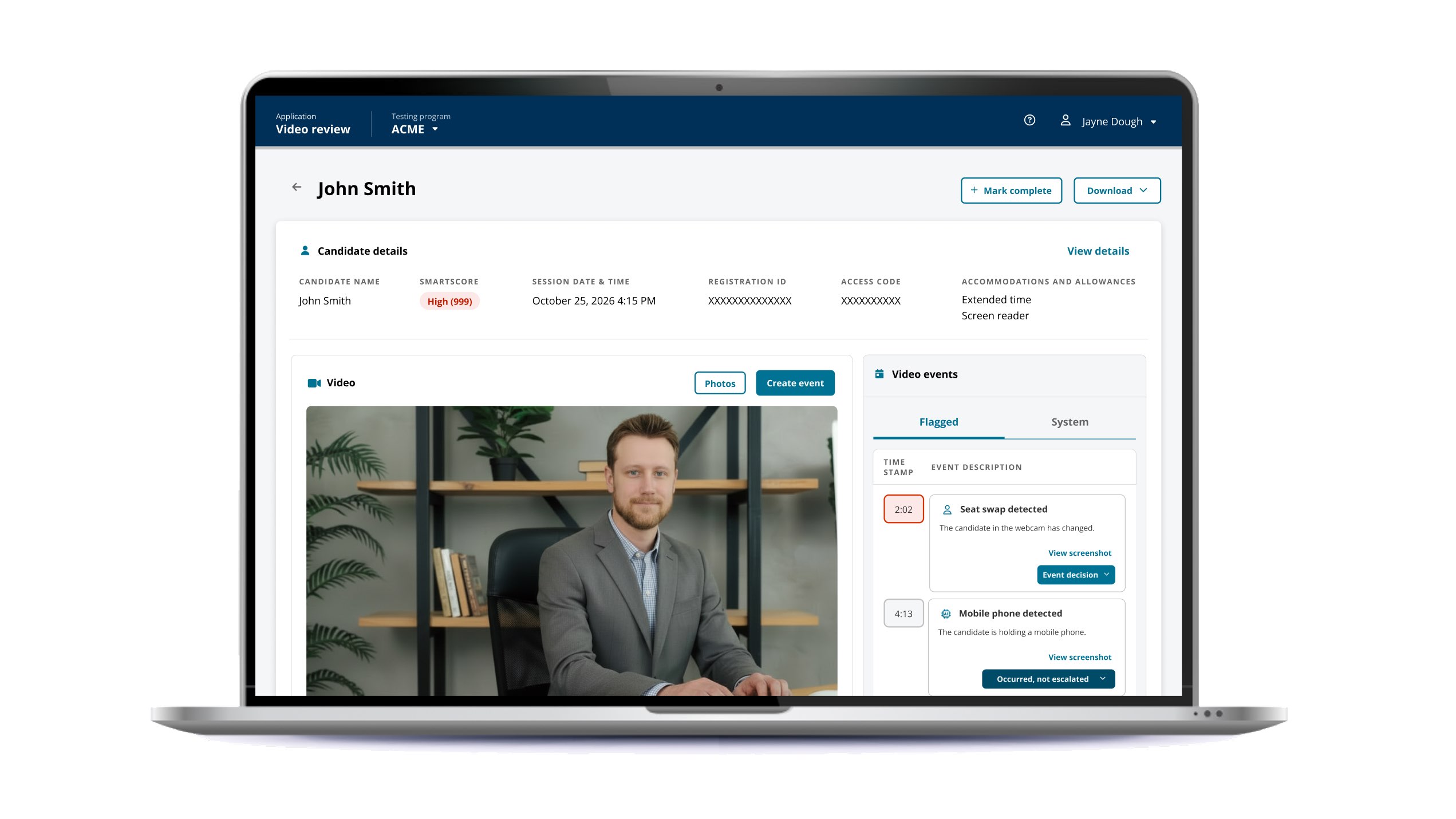
Package AI flags with the evidence a reviewer needs without letting the model become the decision-maker.
A risk flag opens the exact moment and its evidence.
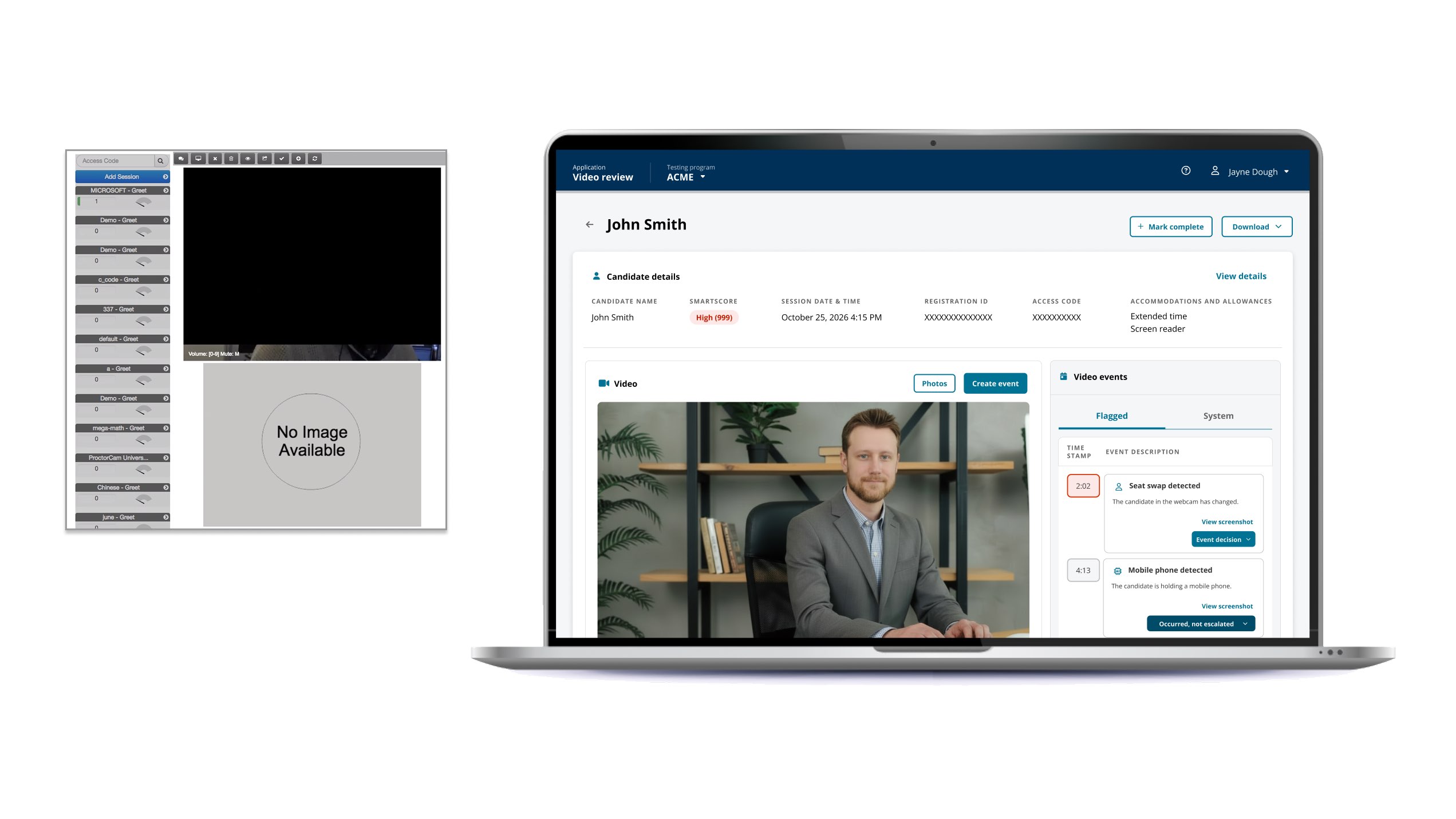
Reason, timestamp, screenshot, event type, video context, and accommodations stay together so the reviewer does not rebuild the case from separate tools.
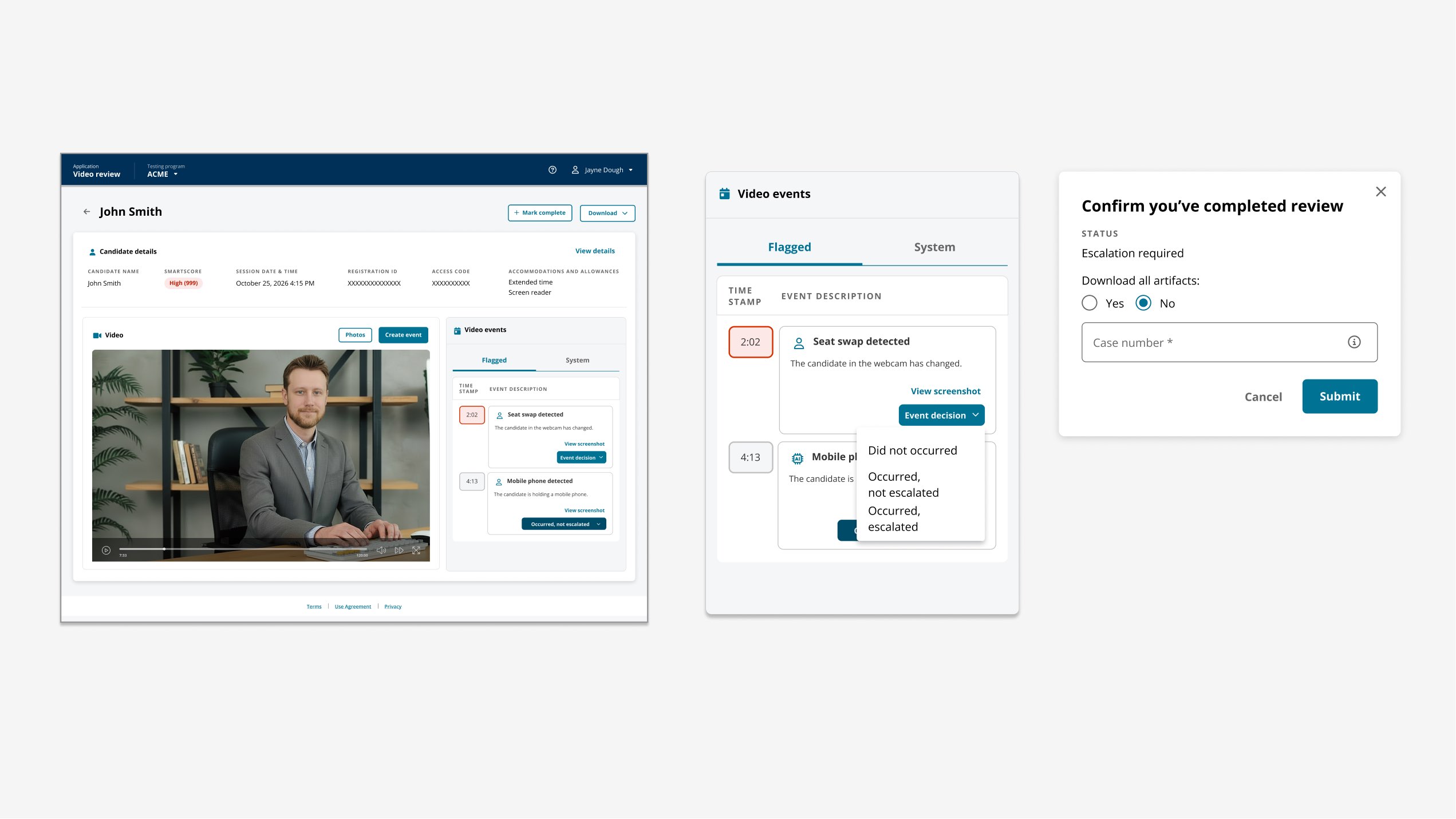
Clear, revoke, escalate, reviewed, and unresolved states use explicit language and semantics.
Queue states, decision states, status feedback, and interface components from the working review product.
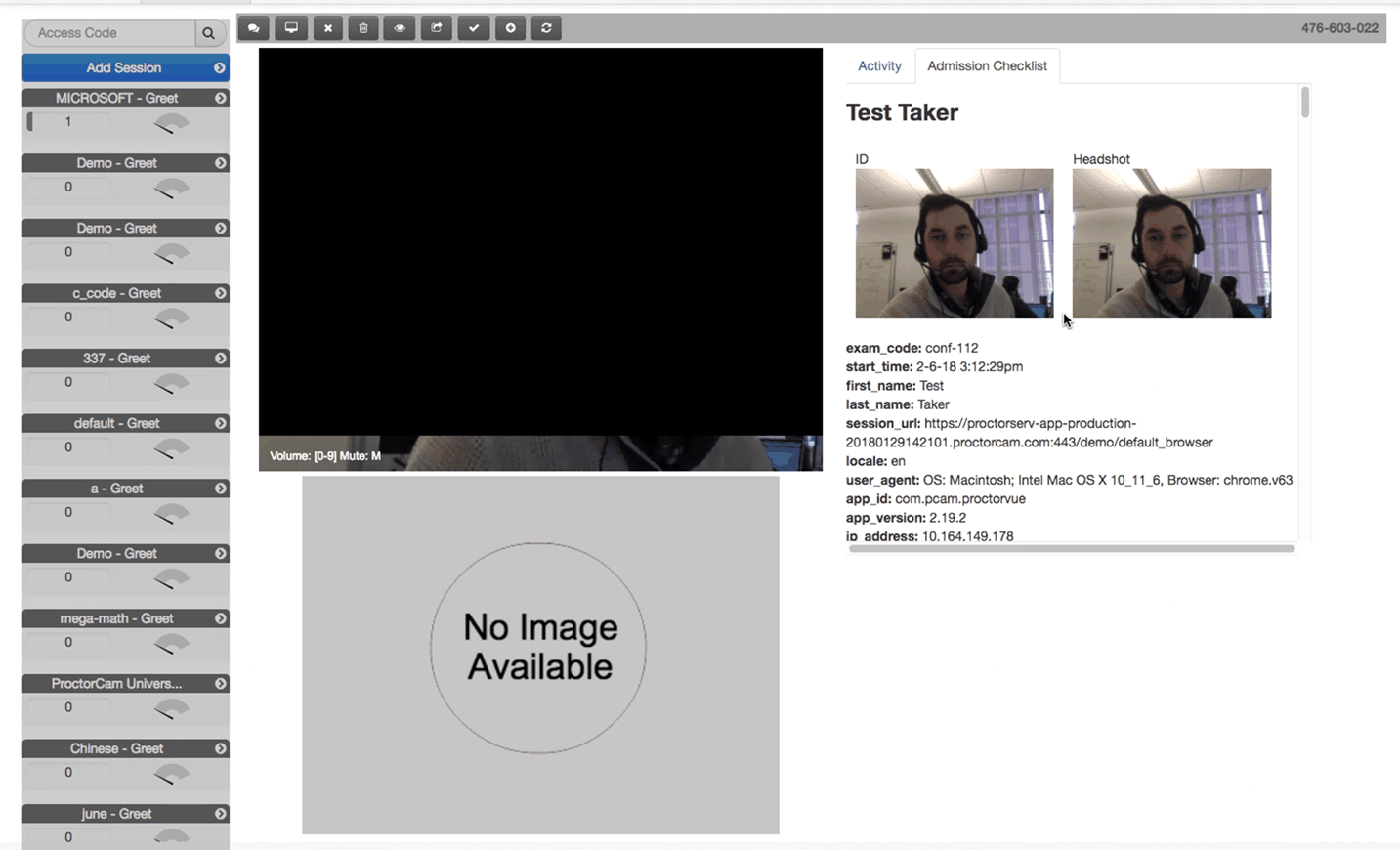
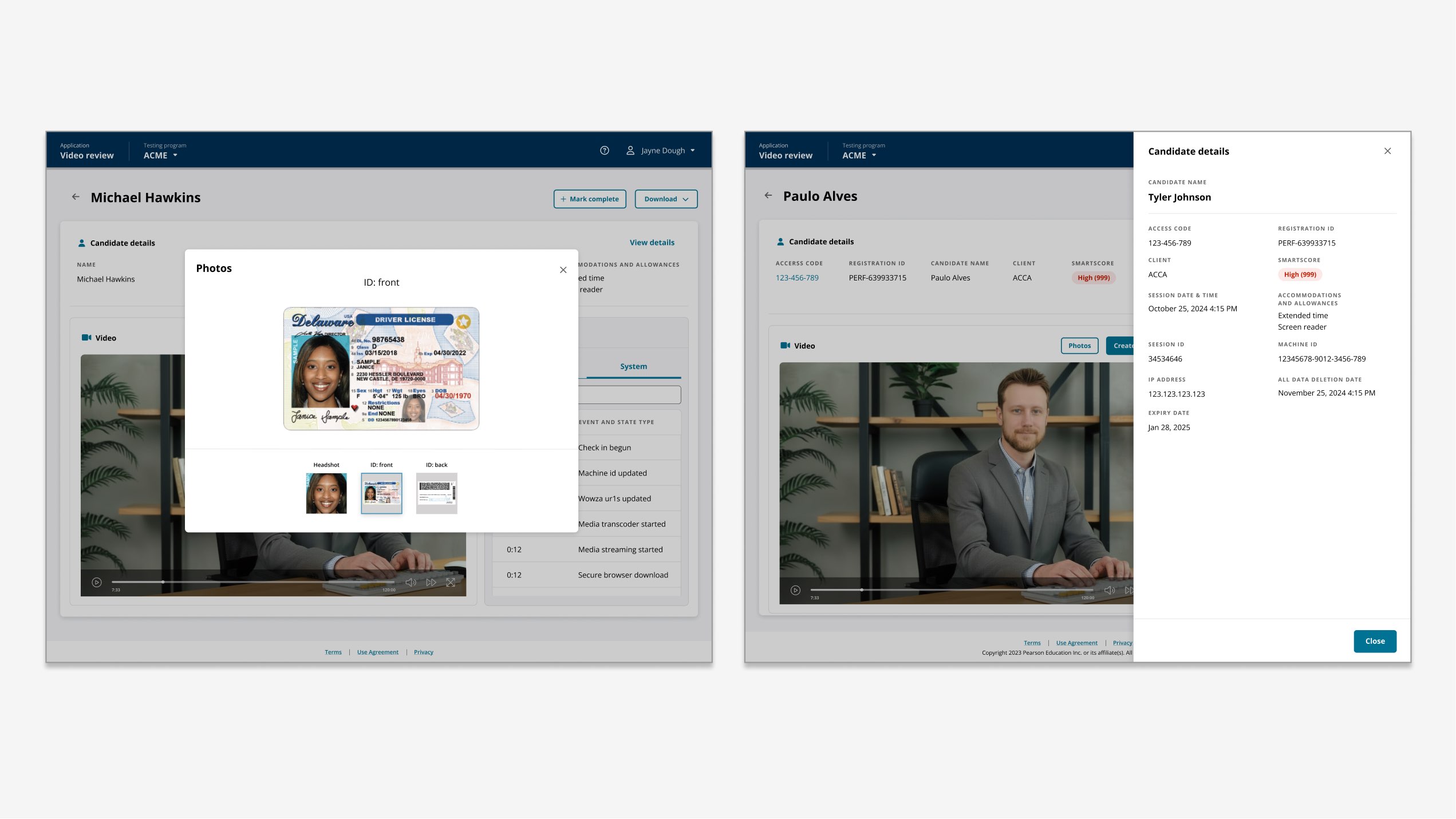
Two rounds with experienced internal users shaped the product. The later study rated the dashboard 4.6/5, video experience 4.3/5, and overall experience 4.5/5.
Faster triage could create automation bias.
Future manager and reporting concepts are shown as direction, not represented as shipped capabilities.
Measure where reviewers override or correct model signals and use those moments to improve both workflow and model feedback.
Includes the role breakdown, evidence, edge cases, outcomes, and lessons.