Pearson VUE · Workspace Scan

When the first attempt failed, recovery became the product.

A guided mobile scan that explains room issues, supports correction, and preserves a path to a human greeter.

Pearson VUE · Workspace Scan experience

Overview

I designed and tested preparation, capture, feedback, retry, and escalation states.

Goals:

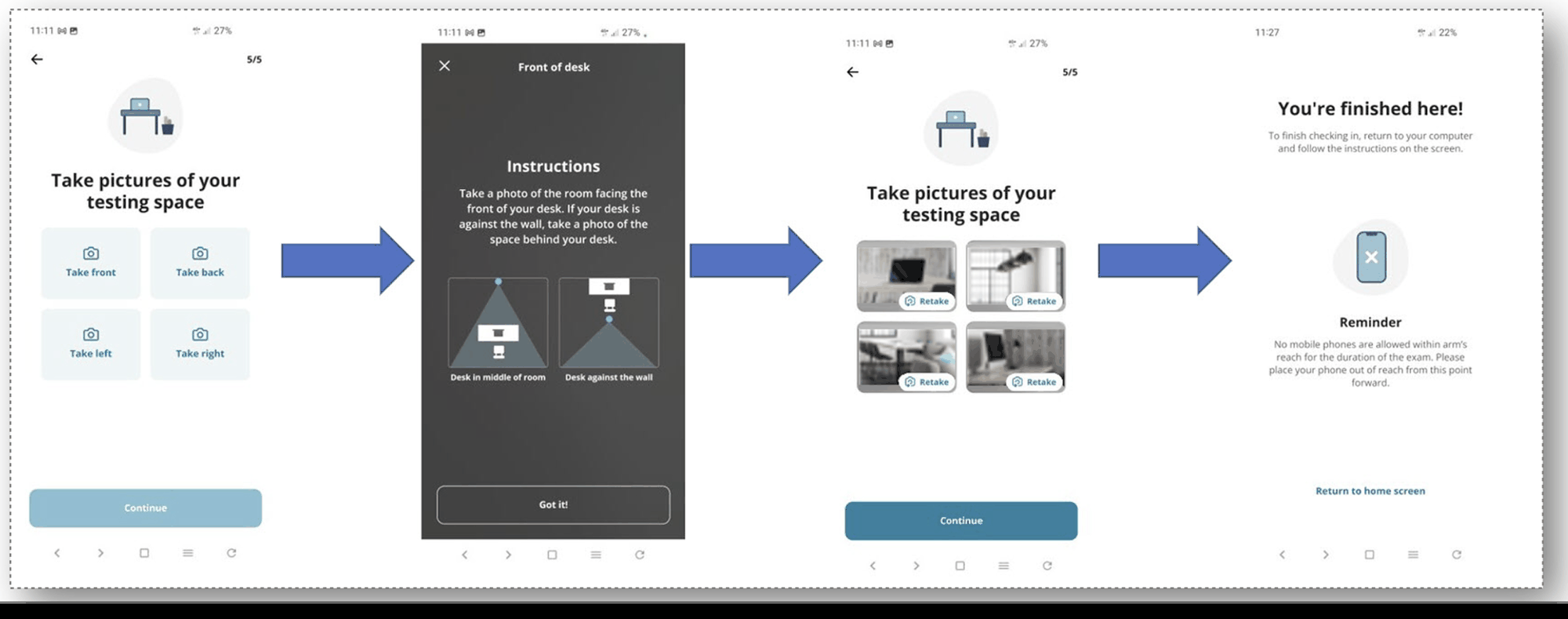
  1. Replace four static room photos with a guided scan that prepares candidates for the physical task.
  2. Explain scan issues early enough for candidates to correct framing or room conditions and try again.
  3. Provide a clear path to a human greeter when self-correction cannot resolve the issue.
Role
Lead product design · UX/UI
Responsibilities
Lead UX/UI for scan preparation, mobile capture, feedback, issue correction, bounded retries, and human handoff, from prototype through usability testing.
Collaborators
Product, computer vision, engineering, operations
Timeline
Proof of concept · testing and validation

Business problem

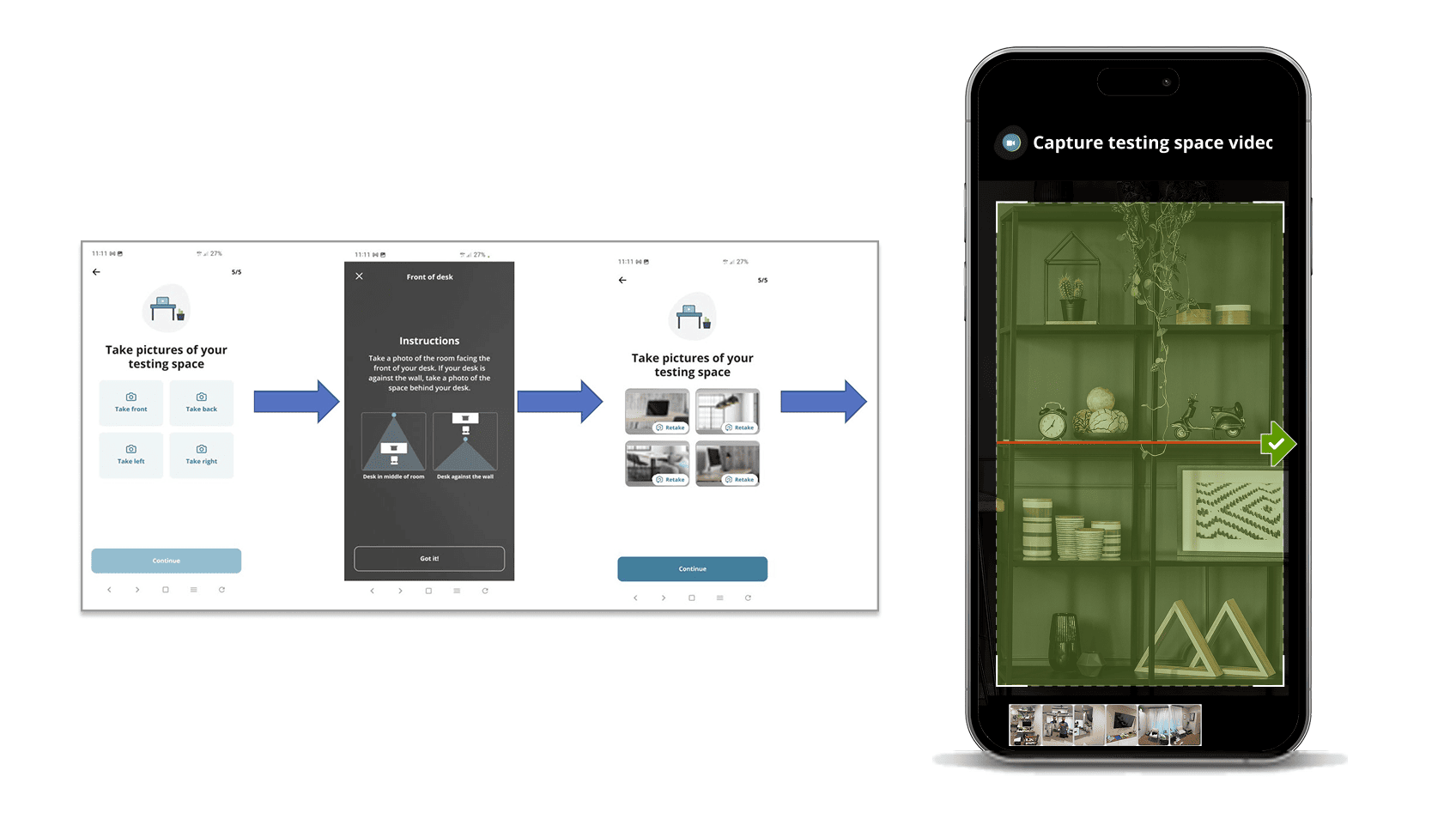
Four still photos often left gaps in workspace coverage, so candidates reached a greeter with issues that could have been identified earlier.

Greeters then spent valuable check-in time requesting more views, explaining requirements, or resolving preventable problems.

Business need

Capture useful workspace evidence earlier and reduce avoidable greeter intervention without allowing uncertain automation to block an exam.
User problem

Candidates had to perform a physical 360° phone scan, but unclear preparation and feedback made it hard to know how to move or what to fix.

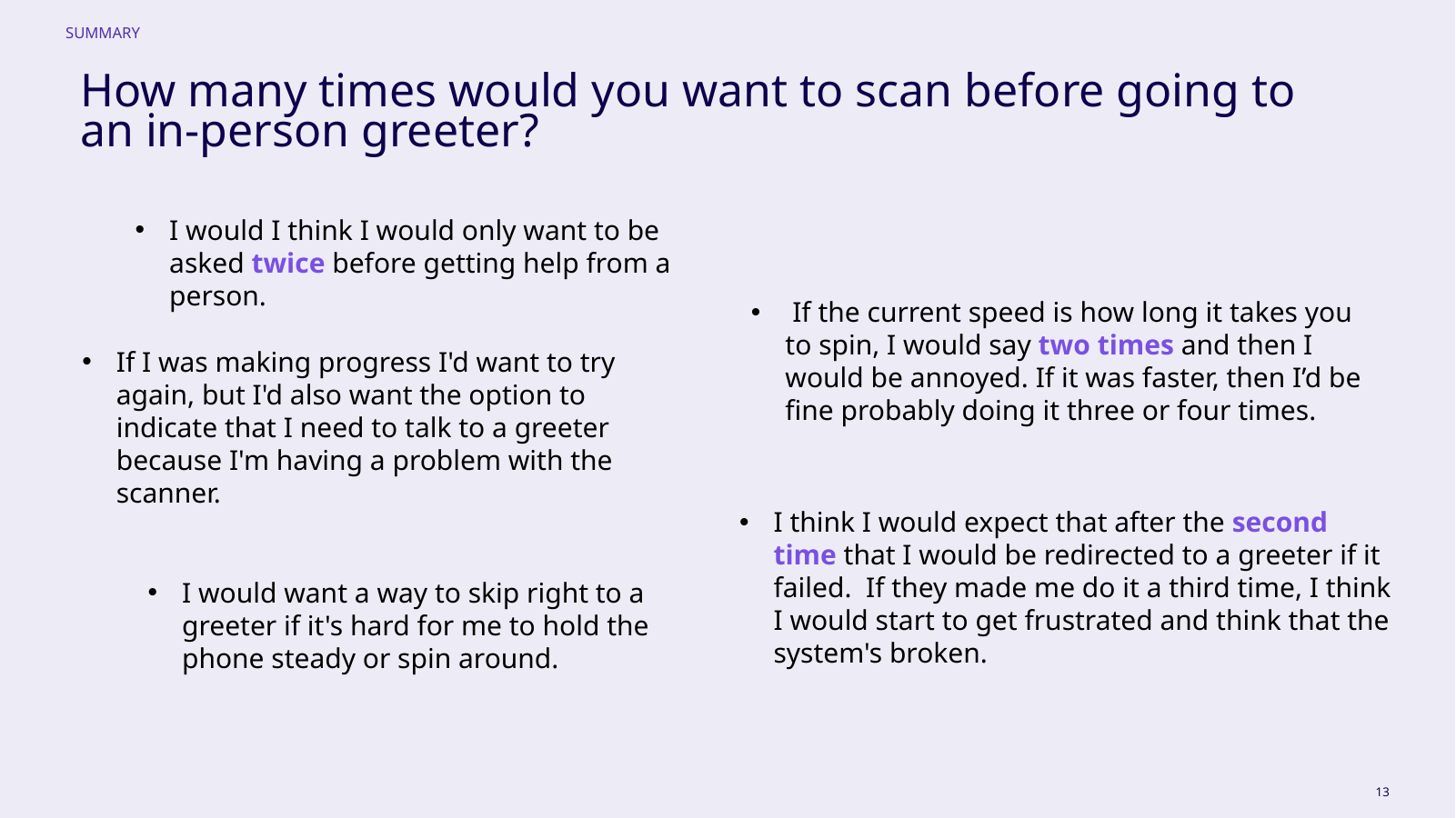
In testing, all six participants missed their first scan and restarted between one and four times.

User need

Plain preparation, in-scan movement cues, specific correction guidance, bounded retries, and a reliable route to a human greeter.

Problem to solve

Problem statement

Help candidates produce a usable 360° workspace scan and resolve detectable issues while providing human recovery when capture or AI interpretation is uncertain.

How might we

How might we help candidates complete a reliable room scan and correct issues themselves without leaving anyone blocked by a failed scan or uncertain AI result?

01 / 06

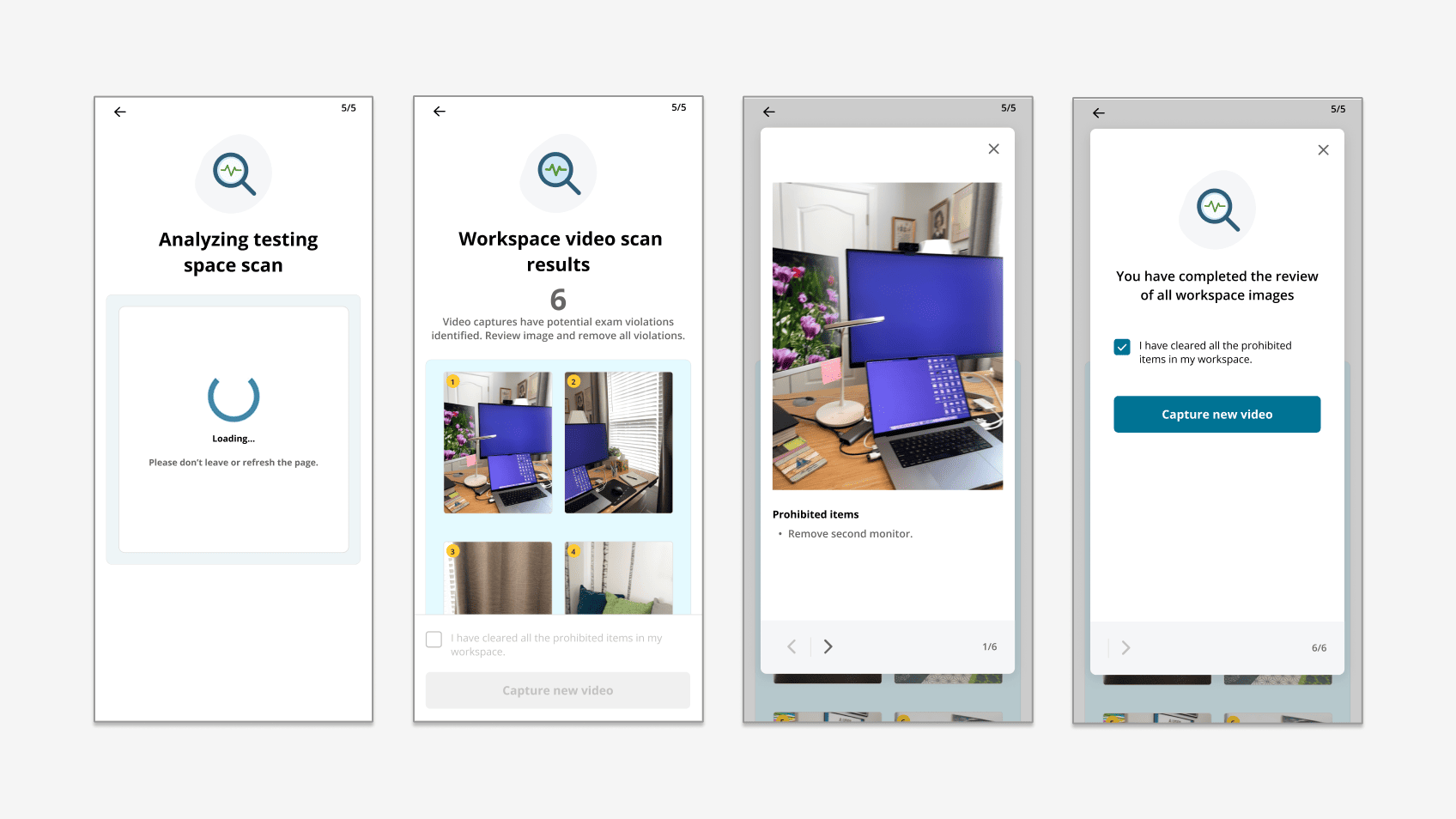
I designed and tested a guided mobile scan that could detect room issues, explain what needed correction, bound repeated failure, and guarantee a route to a human greeter.

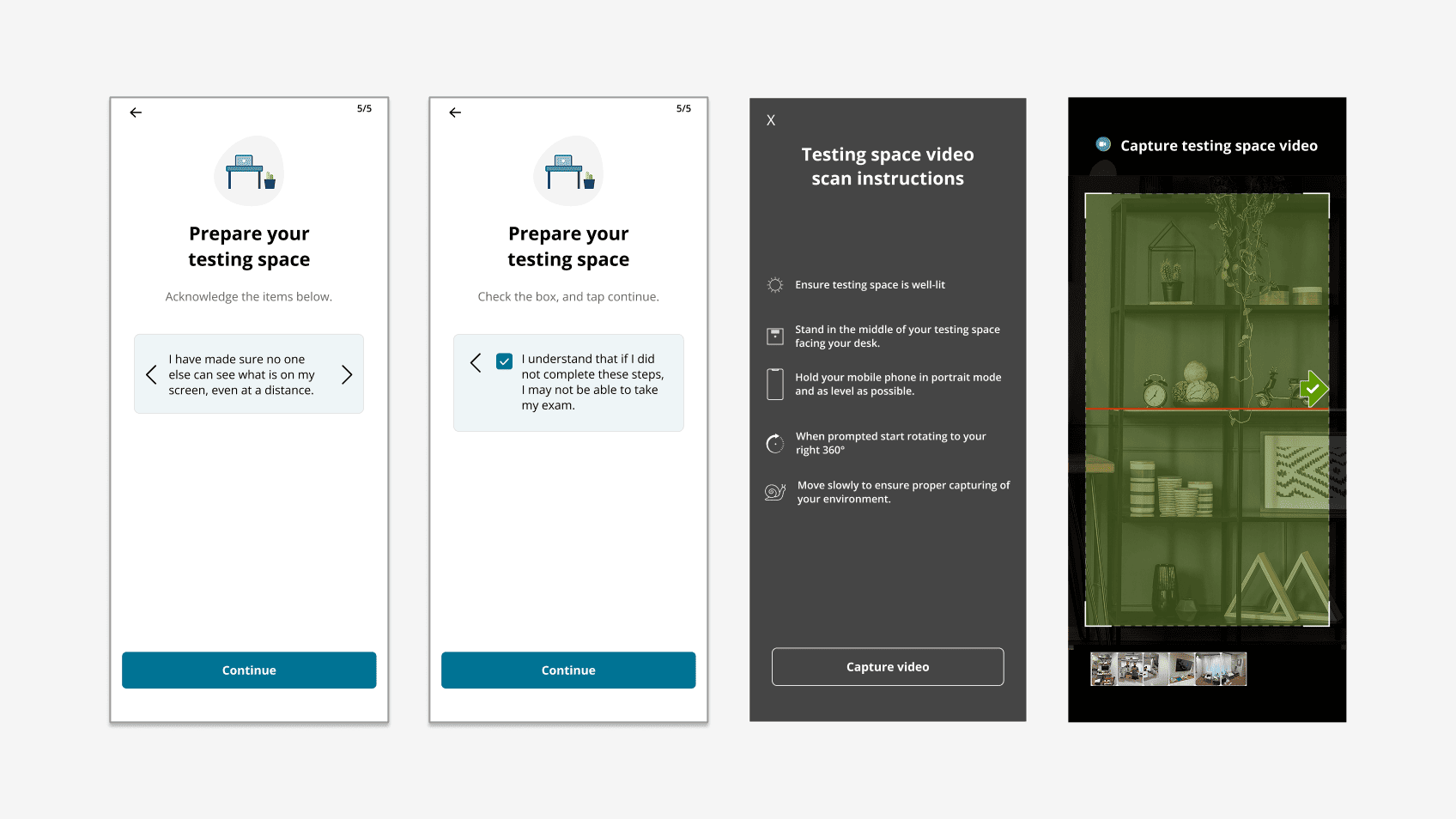
AI-guided workspace scan preparation and live capture sequence
02 / 06

Three decisions shaped scanning and recovery.

Replace four static room photos with guided video and issue detection without allowing persistent AI uncertainty to block an exam.

Workspace scan candidate, AI, and human-review flow

Prepare people for the physical task.

The scan explains movement, framing, and environmental requirements before capture begins.

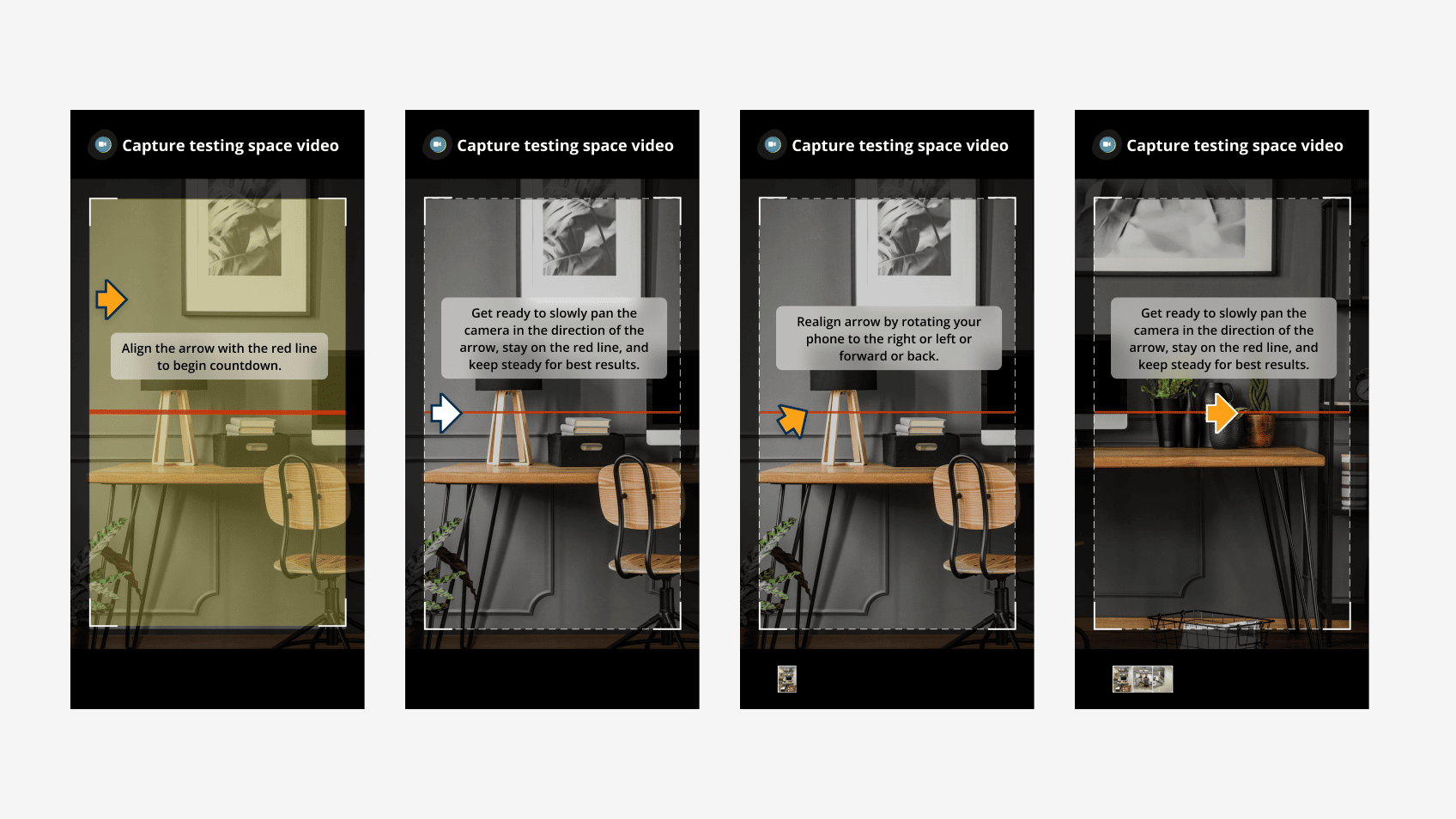
Live workspace scanner guidance and retry states

Give guidance while the candidate can still correct course.

In-scan feedback makes framing and coverage visible instead of waiting until the end to announce failure.

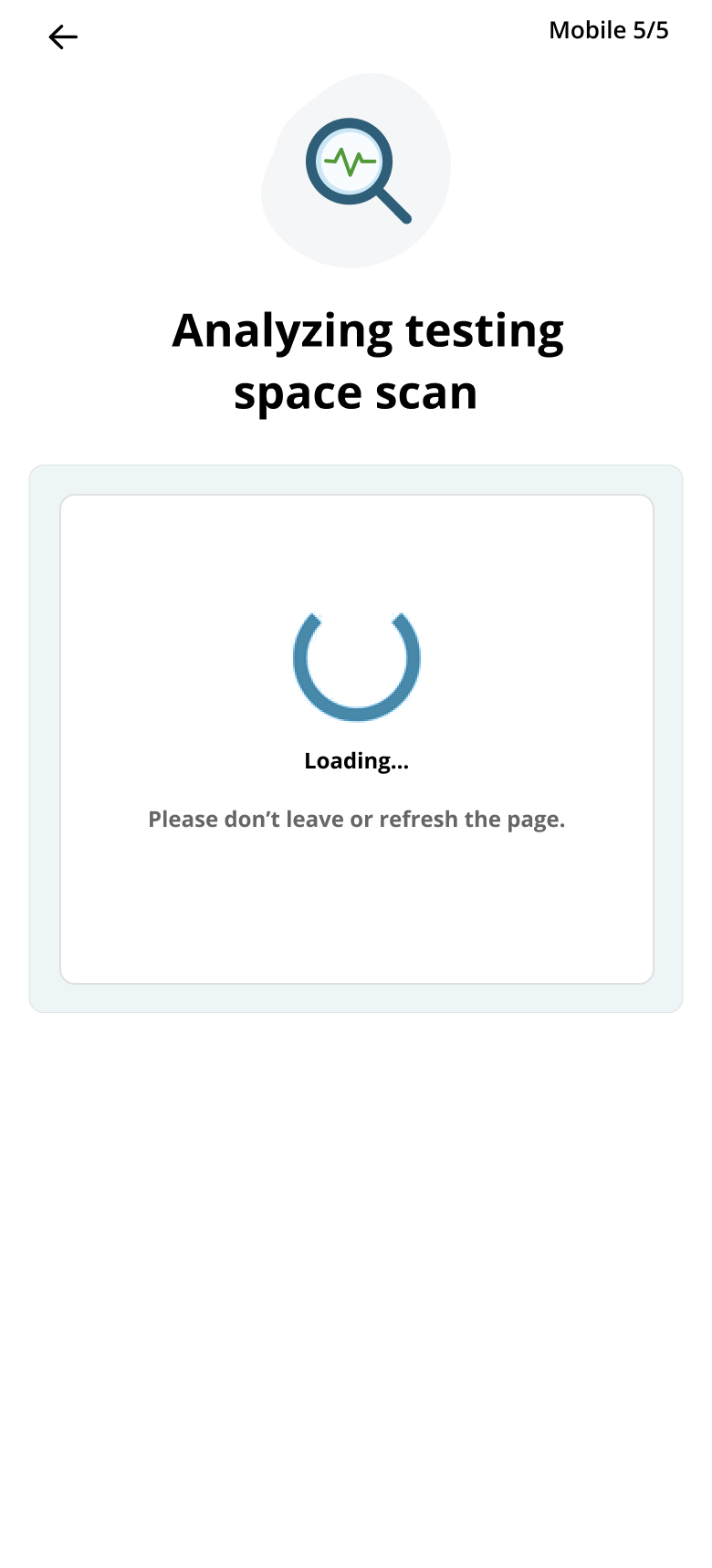
Workspace scan analysis, issue explanation, and completion states

Bound retry and preserve a human exit.

Specific issue results support self-correction.

03 / 06

More of the guided scan experience

Preparation, live scanning, analysis, results, and retry states from the workspace-validation prototype.

More of the guided scan experience interface state 01
An example state from preparation, scanning, results, and retry.
04 / 06

Participants struggled most with the scanner.

Earlier four-photo workspace capture approach before guided scanning

Six participants rated issue results 4.1/5 and the overall proof of concept 3.8/5, but the scanner itself scored 3.4/5. None succeeded on the first scan, and participants restarted one to four times.

05 / 06

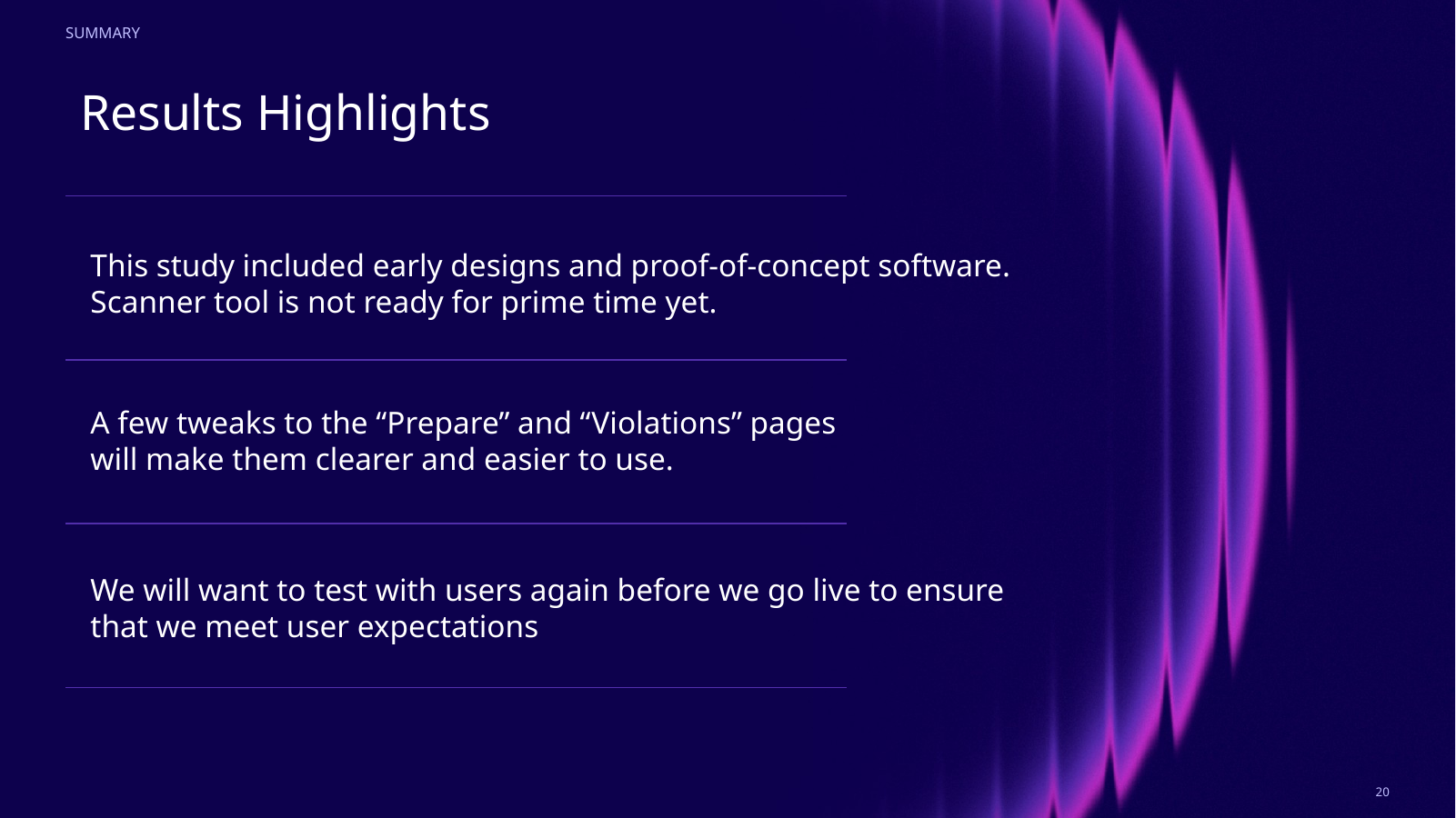
The proof of concept exposed what still needed work.

Tradeoff

More retries may improve capture quality but increase anxiety and time.

Evidence boundary

The 70% detection and 20% false-positive figures are experiment targets, not achieved production results.

Next test

Retest the scanner guidance and retry threshold before making a production efficiency claim.

Workspace scan usability ratings
Study ratings show stronger results content and a scanner that still needed work.
06 / 06

See the evidence behind the decisions.

Includes the role breakdown, evidence, edge cases, outcomes, and lessons.

Workspace scan core usability findings
Research surfaced a mismatch between scanner sensitivity and user movement.

Go deeper

See the decisions behind the work.

The full case study contains additional project context, iterations, and evidence.

Full case study

Next case study

I designed a candidate-first North Star that could expand to later roles and product states.