Pearson VUE · Smart Review AI

AI could find the moment. Reviewers still had to own the judgment.

An evidence-centered review workstation that makes AI signals useful while keeping interpretation, escalation, and the final decision with accountable people.

Pearson VUE · Smart Review AI experience

Overview

I designed the reviewer workflow from queue to evidence inspection and human decision.

Goals:

  1. Use AI signals to guide reviewers to relevant moments while keeping the decision with a person.
  2. Keep reasons, timestamps, evidence, and context together so reviewers can make defensible decisions with less context switching.
  3. Make review, escalation, and audit states clear across reviewer, manager, and investigator workflows.
Role
Lead IC · end-to-end UX/UI
Responsibilities
End-to-end UX/UI for the queue, evidence review, decision states, and escalation, including prototyping, usability iteration, handoff, and QA.
Collaborators
Product, architecture, engineering, quality
Timeline
Two research rounds · 2024–2025

Business problem

A lower-cost remote-proctoring model depended on AI to narrow the review workload, but it had no established reviewer experience for turning model signals into defensible exam decisions.

Reviewers also needed to preserve evidence, escalation, and audit context across different operational roles.

Business need

Increase review capacity and consistency while maintaining defensible decisions, clear escalation, and an auditable evidence trail.
User problem

Reviewers had to locate sessions, interpret flags, find the right video moment, compare evidence, add missed events, and record decisions across a complex workflow.

Managers and investigators needed visibility into what happened after a reviewer acted.

User need

A focused, evidence-centered workstation that brings the relevant moment and context together, makes decision states clear, and keeps final judgment with the reviewer.

Problem to solve

Problem statement

Create a review workflow that turns model signals into useful evidence and supports accountable human decisions from triage through escalation.

How might we

How might we help reviewers reach defensible decisions faster by connecting AI signals to the evidence and context they need, without letting the model decide?

01 / 06

I designed an evidence-centered review workstation that uses model signals to narrow attention while keeping interpretation, escalation, and the final decision with accountable people.

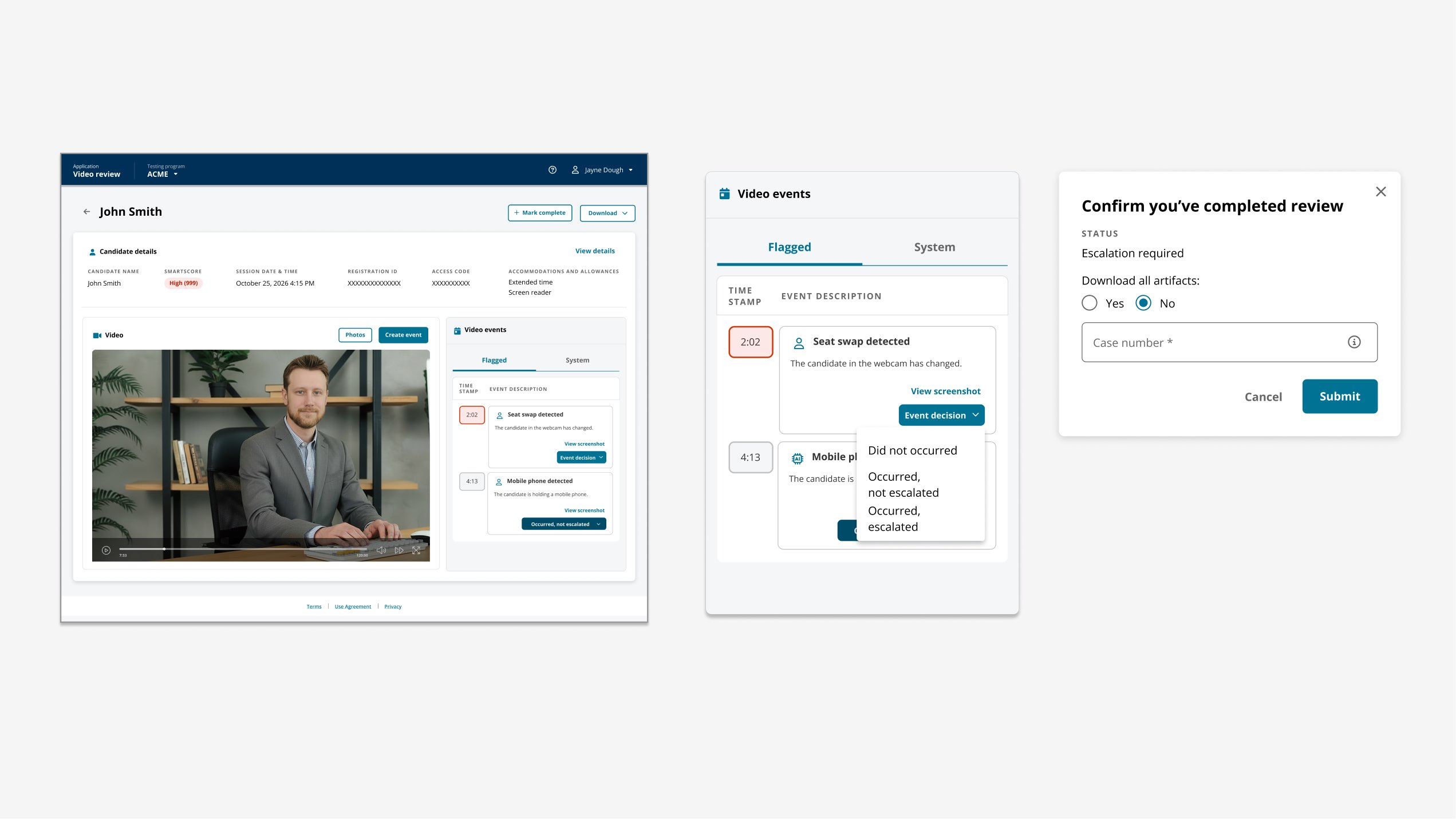
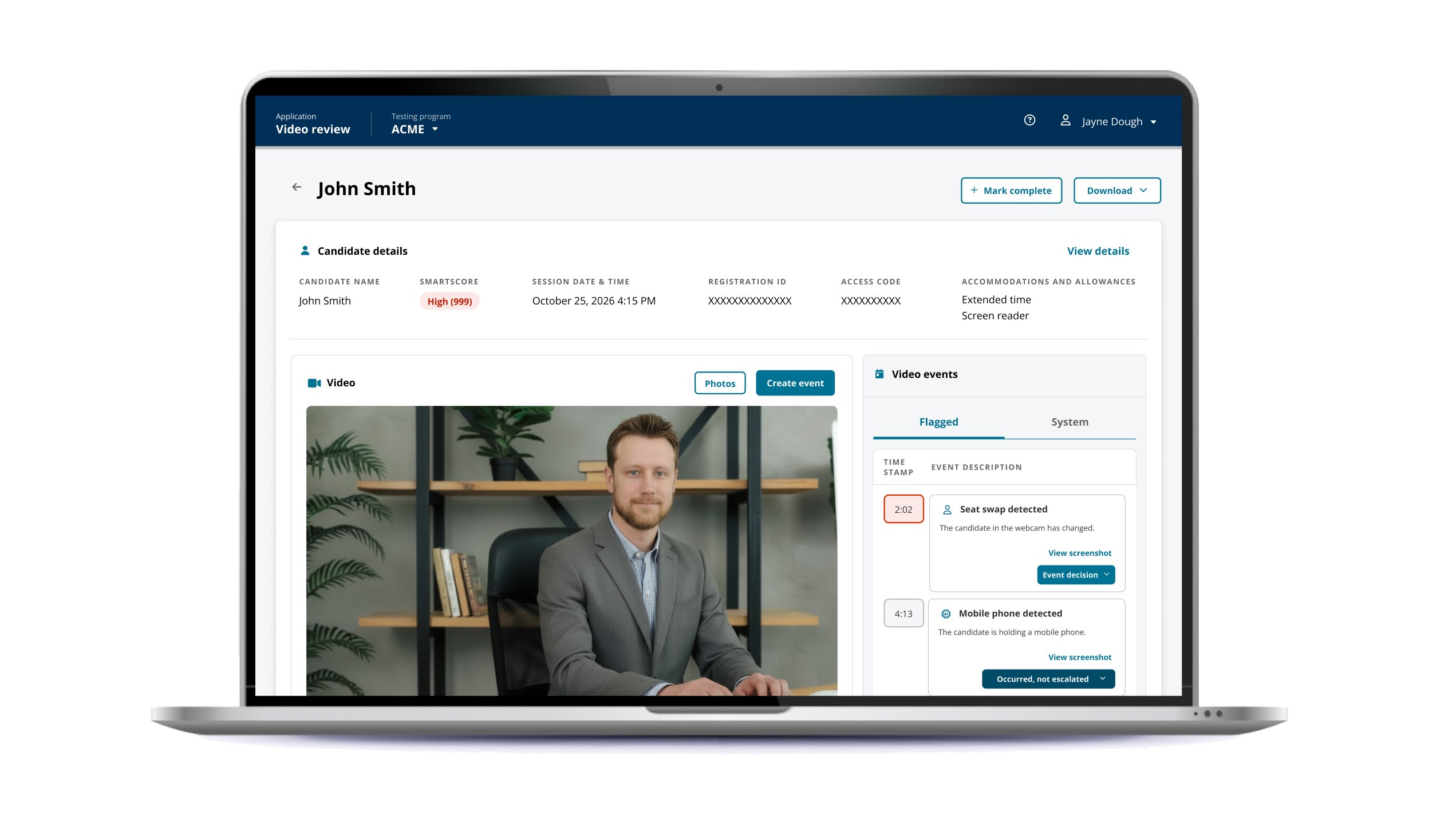
AI-Assisted Review Workstation showing reviewer video, evidence, and decision controls
02 / 06

Three decisions defined the review workflow.

Package AI flags with the evidence a reviewer needs without letting the model become the decision-maker.

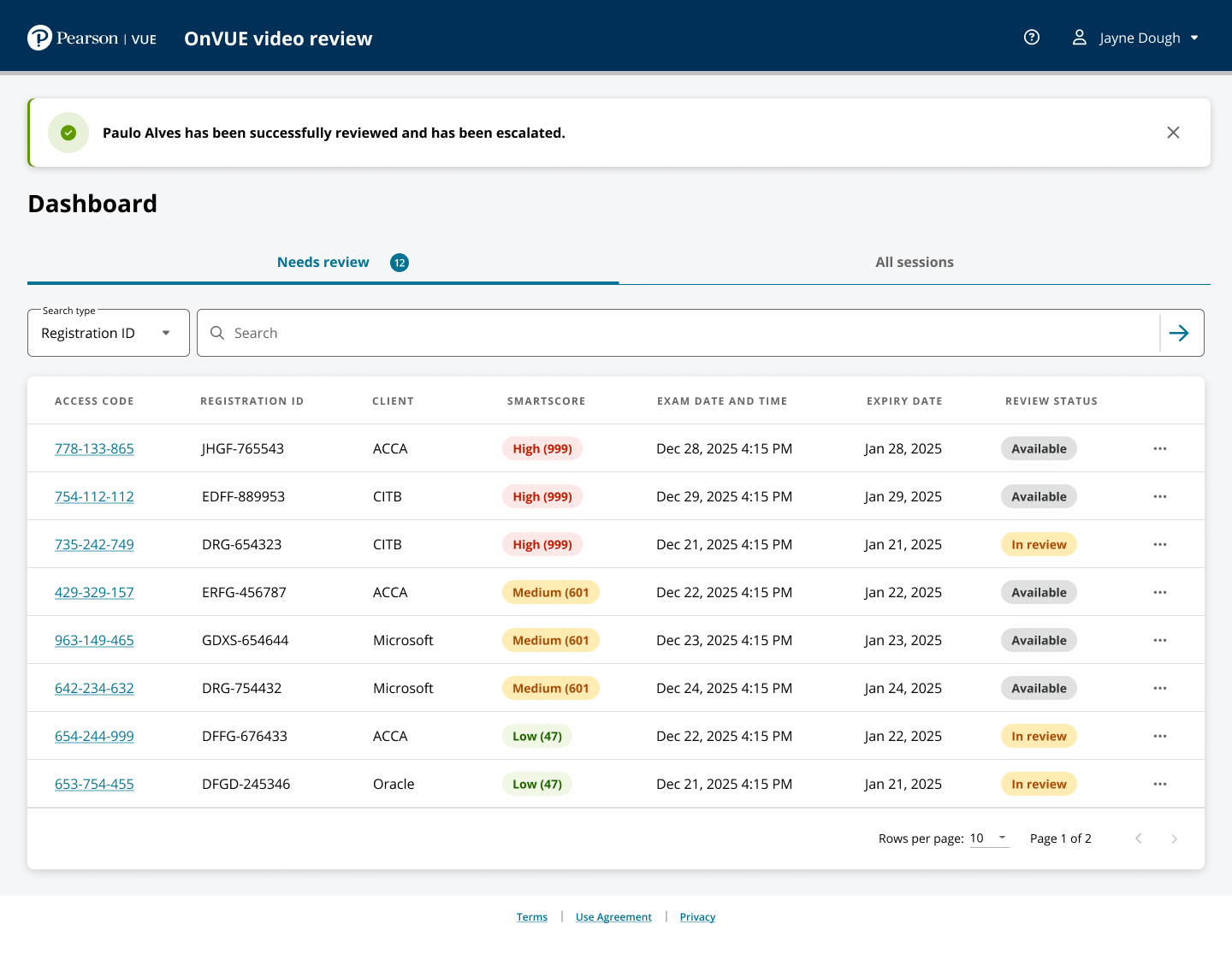
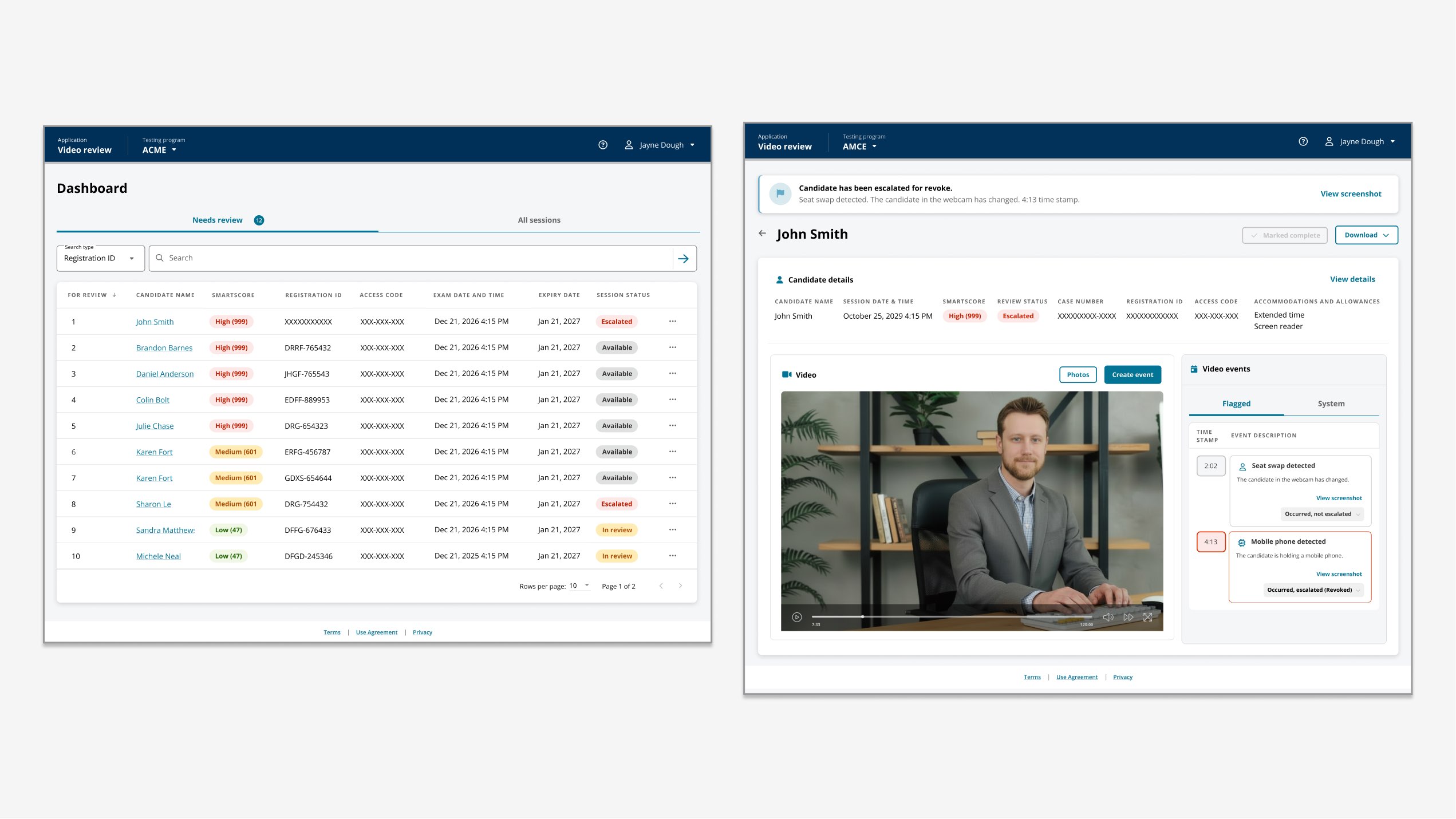
AI-Assisted Review dashboard and review interface shown together

Use the signal as a pointer, not an answer.

A risk flag opens the exact moment and its evidence.

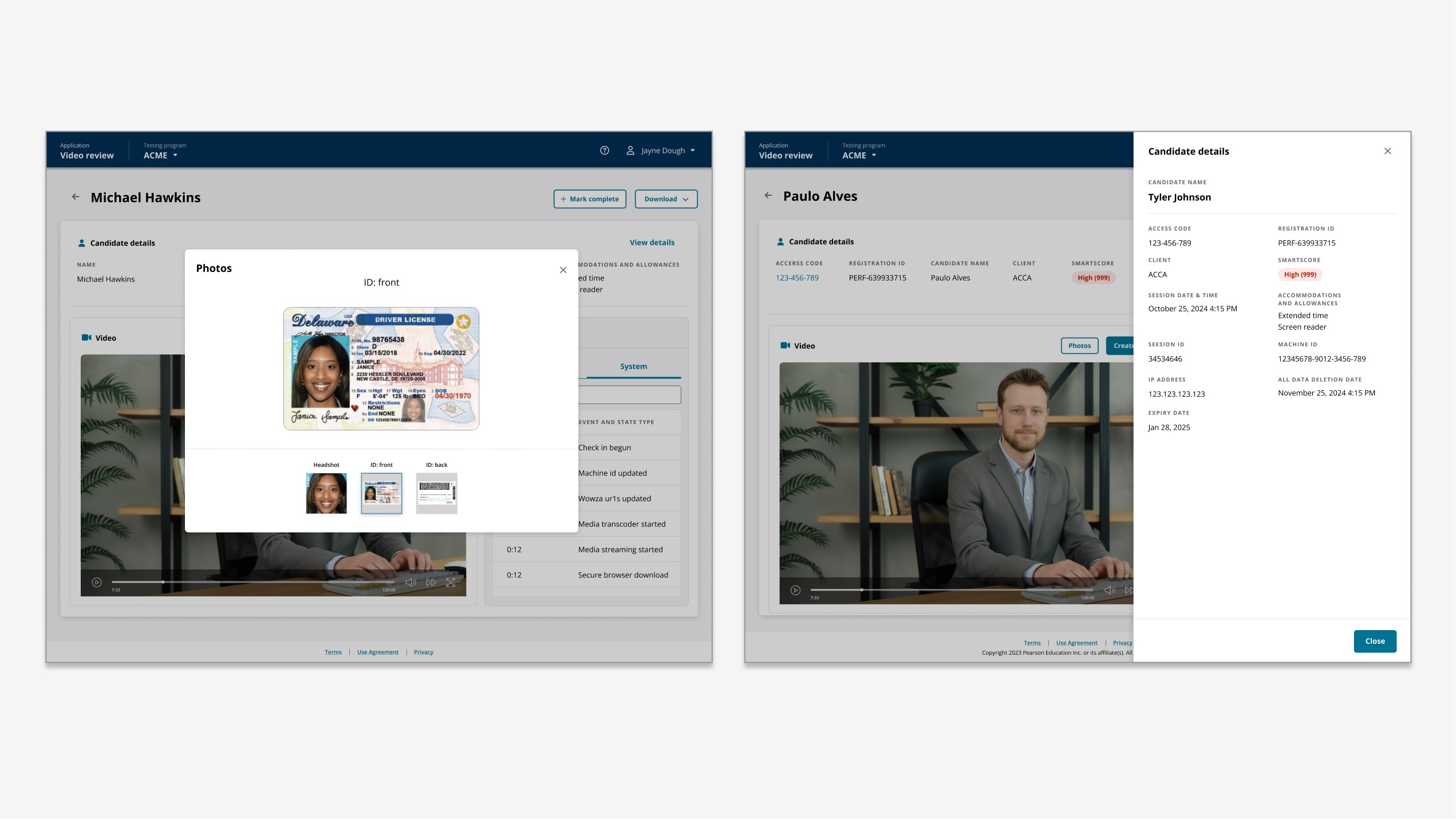
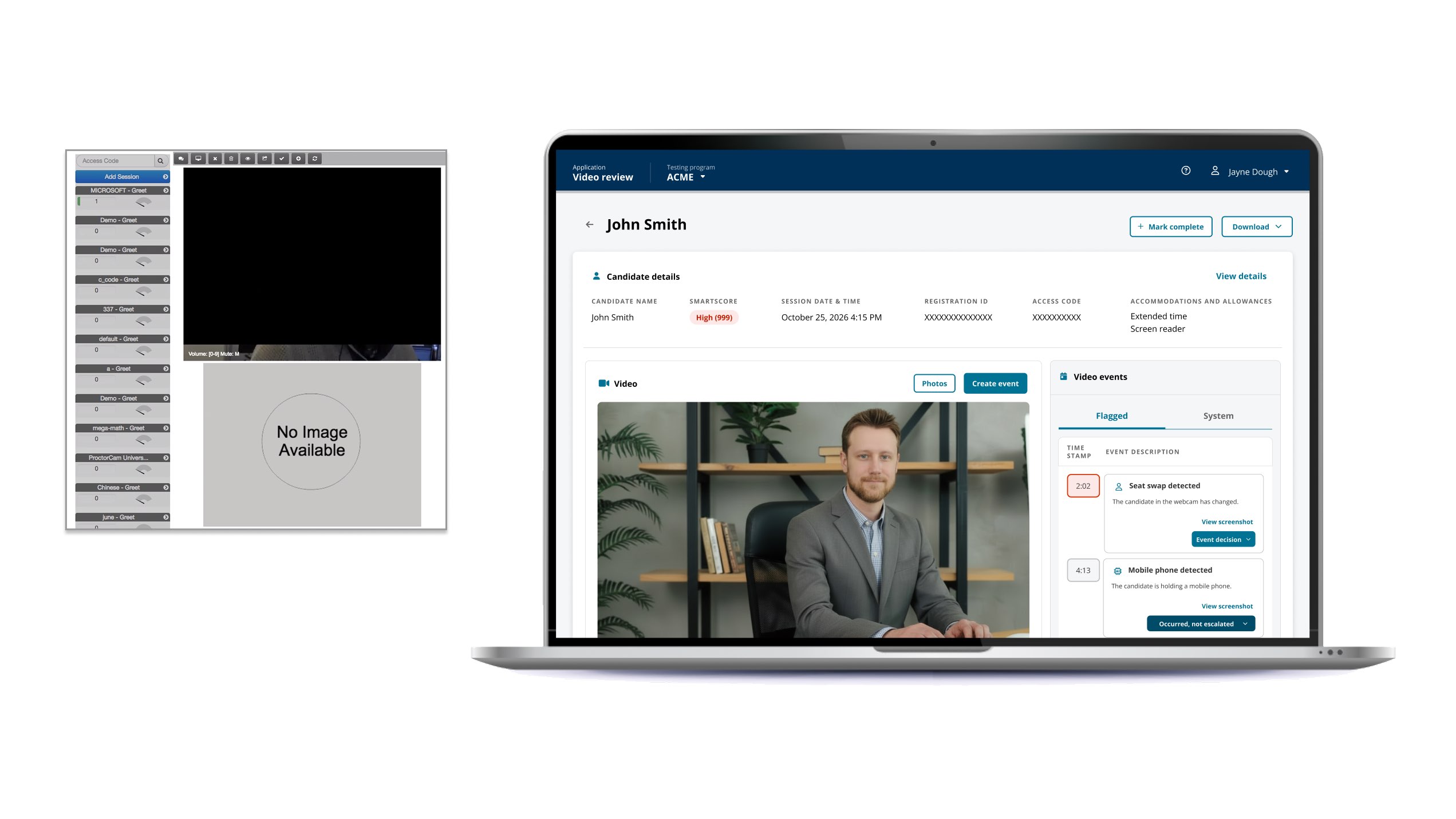
AI-Assisted Review workstation and supporting comparison

Keep the evidence attached to the moment.

Reason, timestamp, screenshot, event type, video context, and accommodations stay together so the reviewer does not rebuild the case from separate tools.

AI-Assisted Review decision and confirmation states

Make the decision state unmistakable.

Unreviewed, did-not-occur, did-occur, escalation-driving, completed, and revoked states use distinct language and visual treatment.

03 / 06

More of the review workstation

Queue states, decision states, status feedback, and interface components from the working review product.

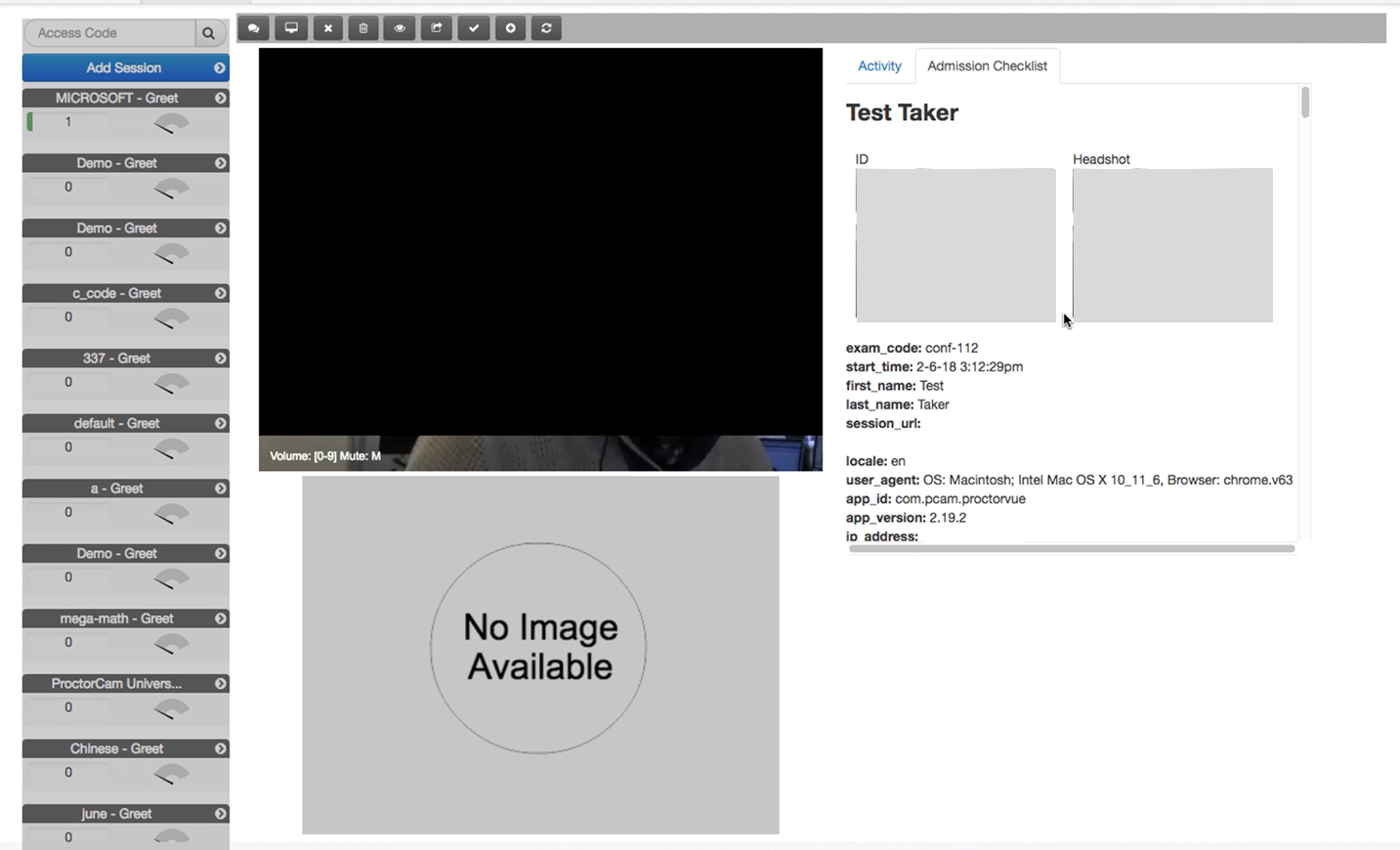
Legacy review workflow before the AI-assisted workstation
04 / 06

Testing showed that reviewers valued having the evidence together.

Smart Review investigator and reviewer context

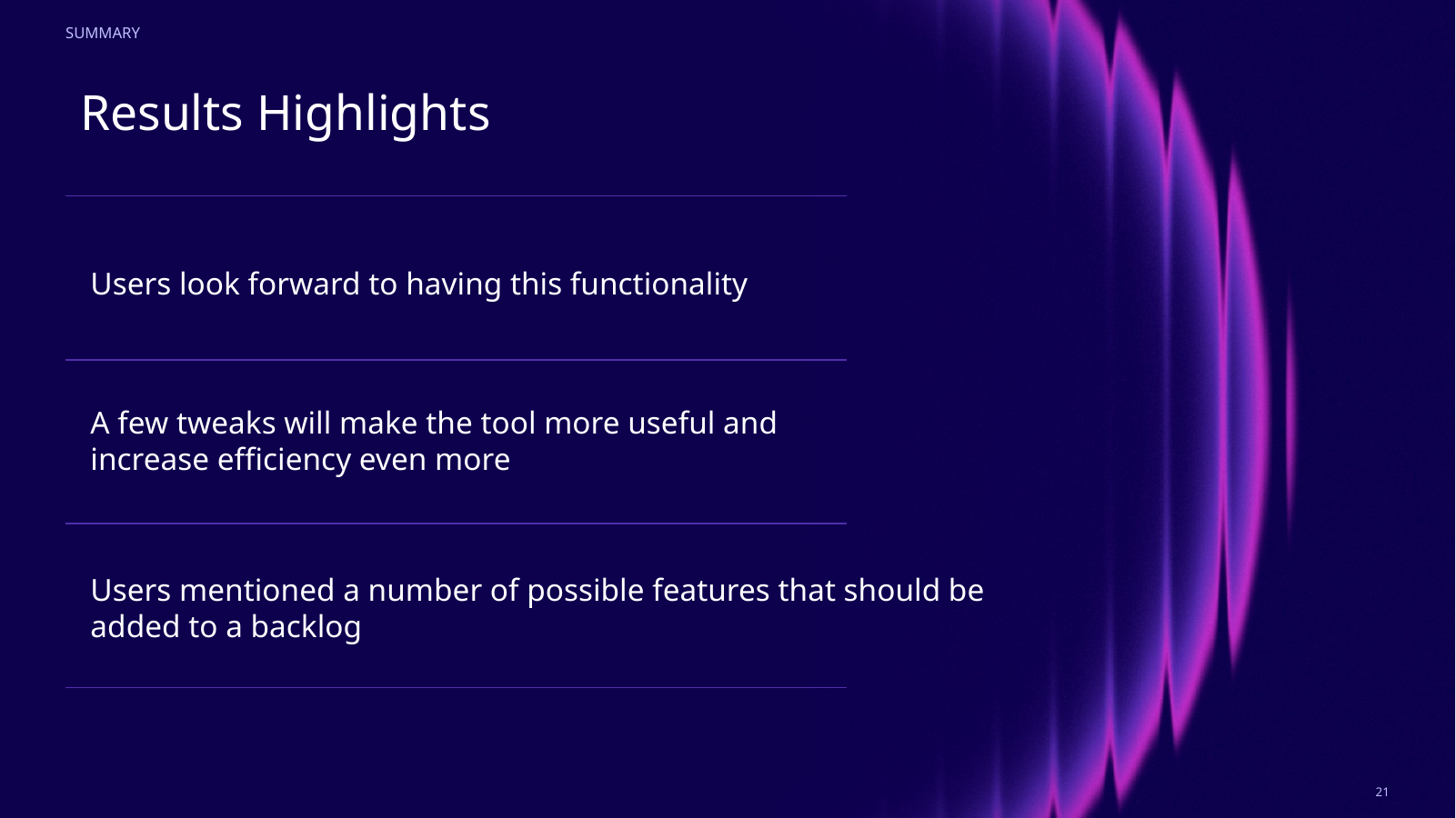
Two rounds with experienced internal users shaped the product. The later study rated the dashboard 4.6/5, video experience 4.3/5, and overall experience 4.5/5.

05 / 06

The workflow still has clear limits.

Tradeoff

Faster triage could create automation bias.

Evidence boundary

Future manager and reporting concepts are shown as direction, not represented as shipped capabilities.

Next test

Measure where reviewers override or correct model signals and use those moments to improve both workflow and model feedback.

AI-Assisted Review Workstation escalation decision
The escalation state keeps the reviewer’s decision explicit.
06 / 06

See the evidence behind the decisions.

Includes the role breakdown, evidence, edge cases, outcomes, and lessons.

AI-Assisted Review Workstation usability ratings
Experienced users validated the workflow and identified refinements.

Go deeper

See the decisions behind the work.

The full case study contains additional project context, iterations, and evidence.

Full case study

Next case study

A high-stakes check-in has to survive every handoff.